Available now · worldwide on Amazon
The Calibrated Mind
How to Hold Judgments at Their Right Strength Under Uncertainty
Stop confusing a feeling of certainty with a measurement of it
CALIBRATE gives operators repeatable practices for matching confidence to evidence, updating beliefs as facts change, and acting without pretending uncertainty is gone.
Get the book
Reading from another country?Pick your own Amazon marketplace — same edition, your store.
Amazon links may include affiliate tags. That does not change the price you pay. Bol.com listings are third-party.
English & Dutch editions · Paperback, Hardcover · Nederlandse editie →
- pages
- 286
- chapters
- 13
- hours of reading
- ± 4
- editions
- EN · NL


The editions
Choose your format
Same book, your format. You buy on Amazon, not on this site.
-
Paperback
The working copy. Mark it up. Take it into the meeting.
Buy on Amazon -
Hardcover
The shelf edition. Dark full-art jacket, built to stay in the room.
Buy on Amazon


Available now
How to Hold Judgments at Their Right Strength Under Uncertainty
You say you are "pretty sure" and act as if you are certain. You round a 60 percent read up to a yes, defend it like a 99, and discover the gap only when it costs you. Under pressure your judgments collapse into two settings (confident and panicked), and neither one matches what the evidence actually supports.
The usual fix is to "be more confident" or "trust your gut." That advice has no dial. It tells you how loud to sound, not how sure you are entitled to be, and it leaves you overcommitting to thin reads and freezing on strong ones.
The Calibrated Mind treats confidence as a quantity you can measure, train, and correct, not a mood you project. Built on judgment research, forecasting science, and decision theory, it introduces the CALIBRATE framework: a set of trainable skills for holding every judgment at exactly the strength its evidence supports, then updating that strength as the evidence moves.
What you can do
What this book puts in your hands
You will learn to:
- Separate how sure you feel from how sure the evidence makes you, and close the gap on purpose.
- Attach real probabilities to your reads, so "likely" stops hiding three different bets.
- Look for the evidence that would prove you wrong before the evidence that flatters you.
- Update in increments instead of flipping from certain to certain when new data lands.
- Track your calls against outcomes, so your confidence earns its accuracy instead of assuming it.
The framework
CALIBRATE: the system behind the book
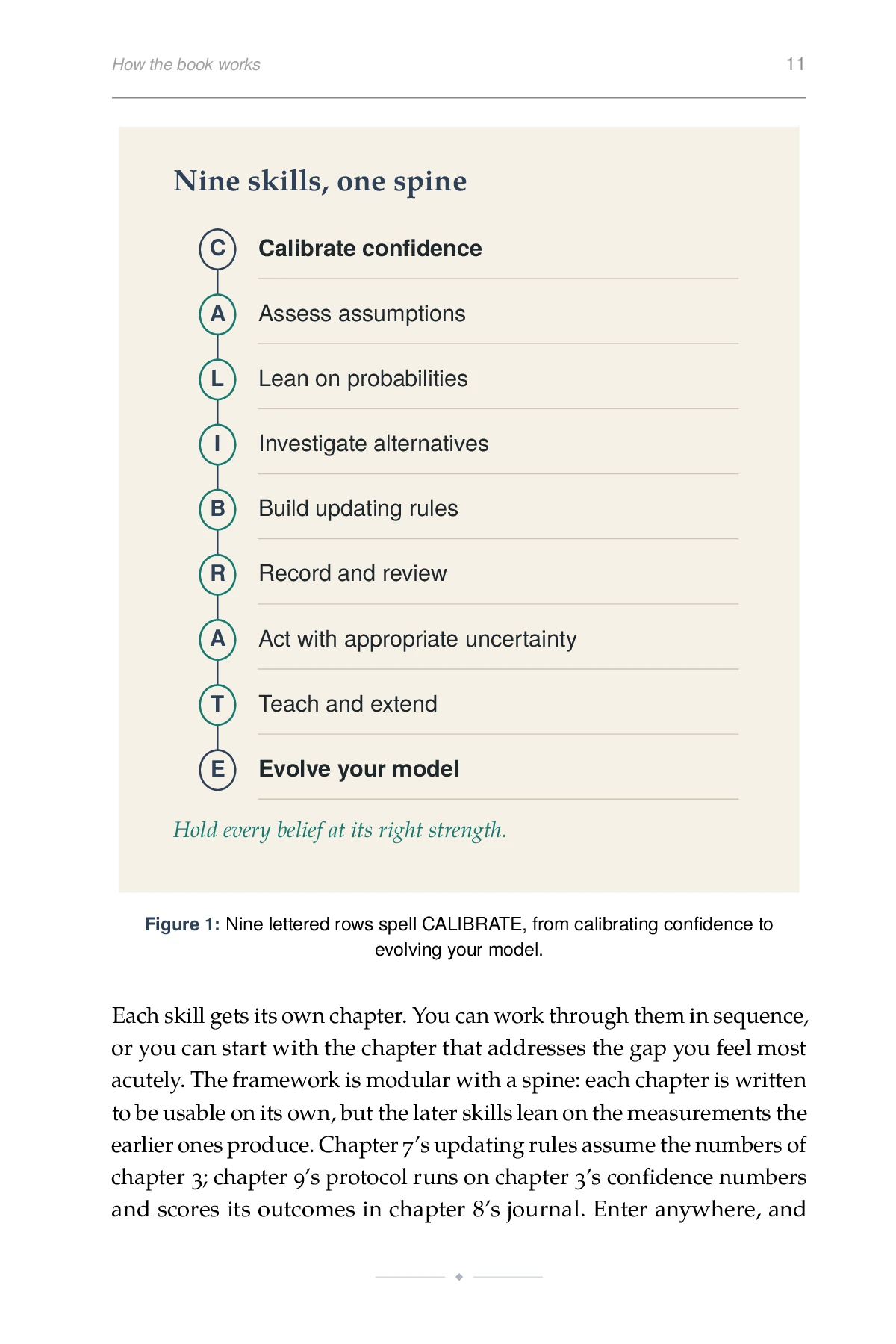
nine operational skills you run on any judgment
-
Calibrate confidence
Confidence should be a measurement, not a feeling: take your probability temperature and track whether it reads true.
-
Assess assumptions
Every judgment rests on hidden premises. Surface them before they surface you.
-
Lean on probabilities
Attach real probabilities to your reads, so “likely” stops hiding three different bets.
-
Investigate alternatives
The best test of a belief is the strongest alternative you can construct against it.
-
Build updating rules
Decide how much evidence should move you before the result lands, while you can still be honest.
-
Record and review
A prediction journal is the scorecard that does not lie about your judgment.
-
Act with appropriate uncertainty
You do not need certainty to act. You need a threshold, and the discipline to use it.
-
Teach and extend
The fastest way to find holes in your calibration is to explain it to someone else.
-
Evolve your model
Calibration is a practice, not a state. Notice your own drift and correct it before it costs you.
From the book
Nine lettered rows spell CALIBRATE, from calibrating confidence to
The Calibrated Mind, printed page: Nine lettered rows spell CALIBRATE, from calibrating confidence to
Inspect more pagesLook inside
Pages from the print edition.
 Nine lettered rows spell CALIBRATE, from calibrating confidence to
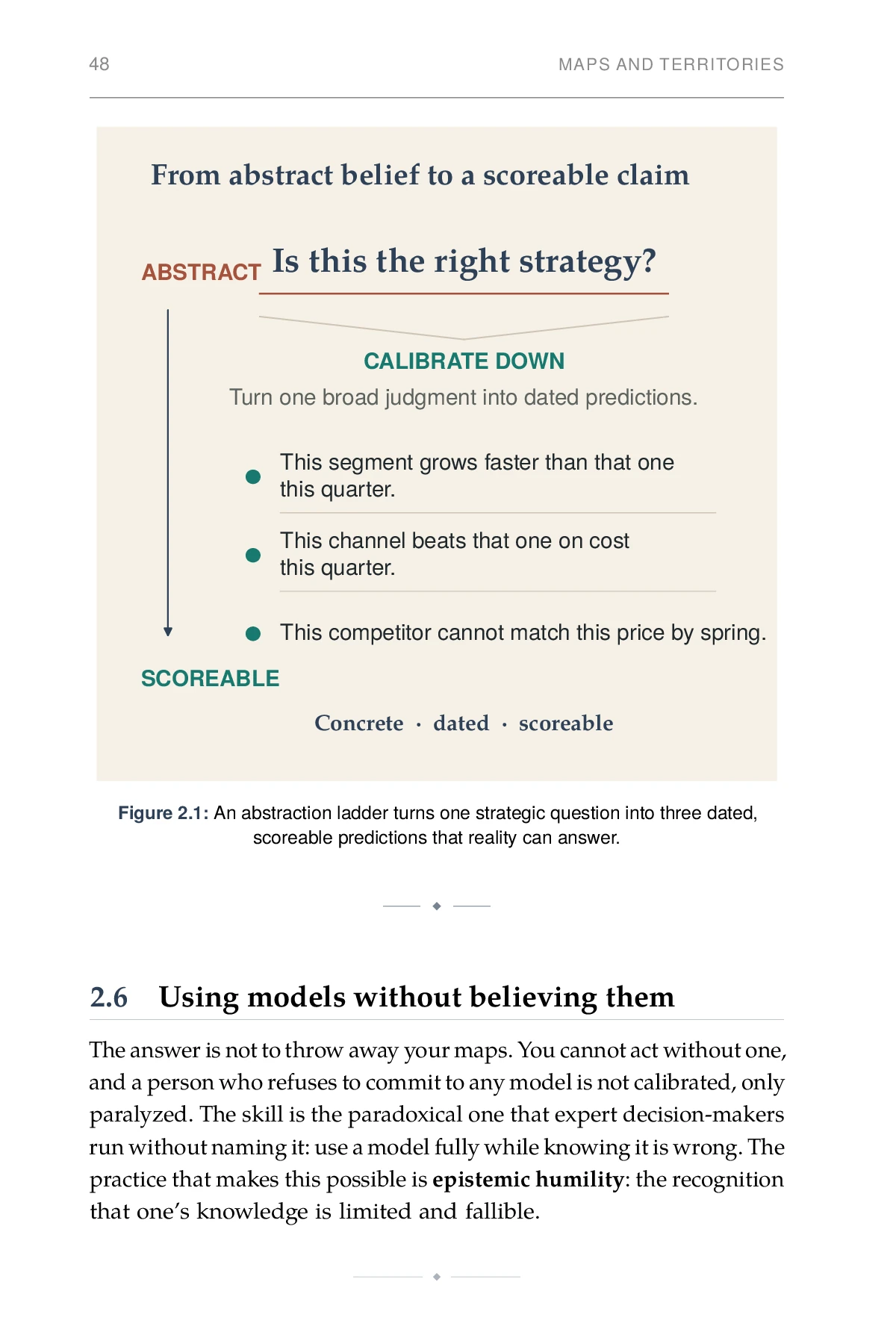
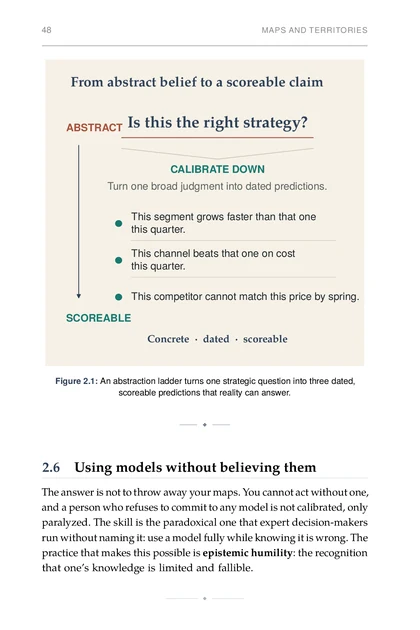 An abstraction ladder turns one strategic question into three dated,
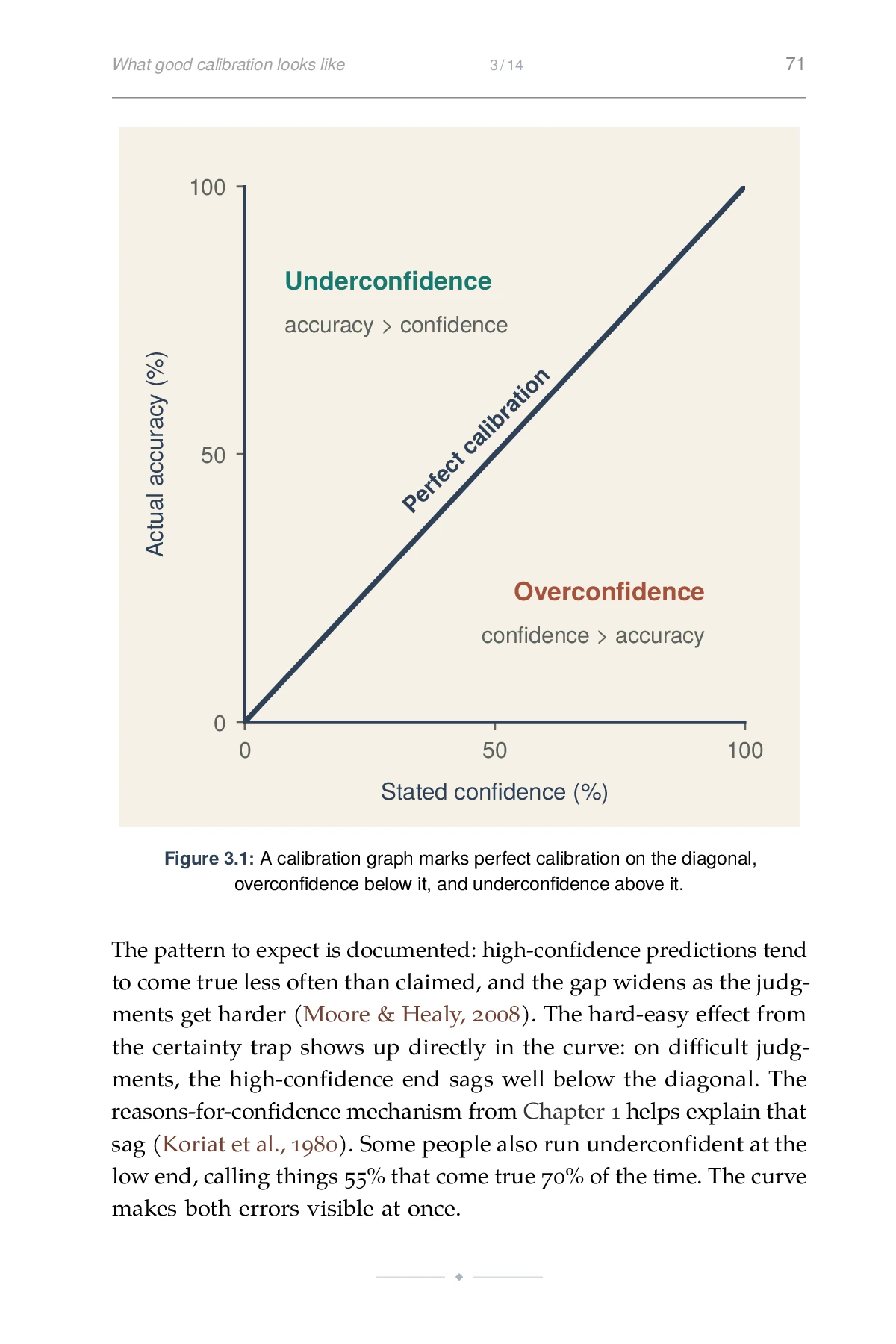
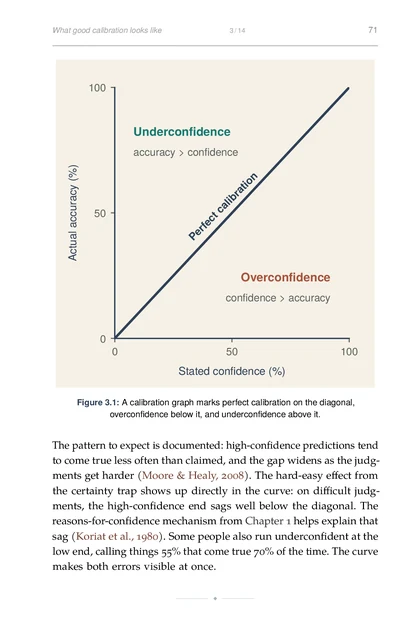 A calibration graph marks perfect calibration on the diagonal,
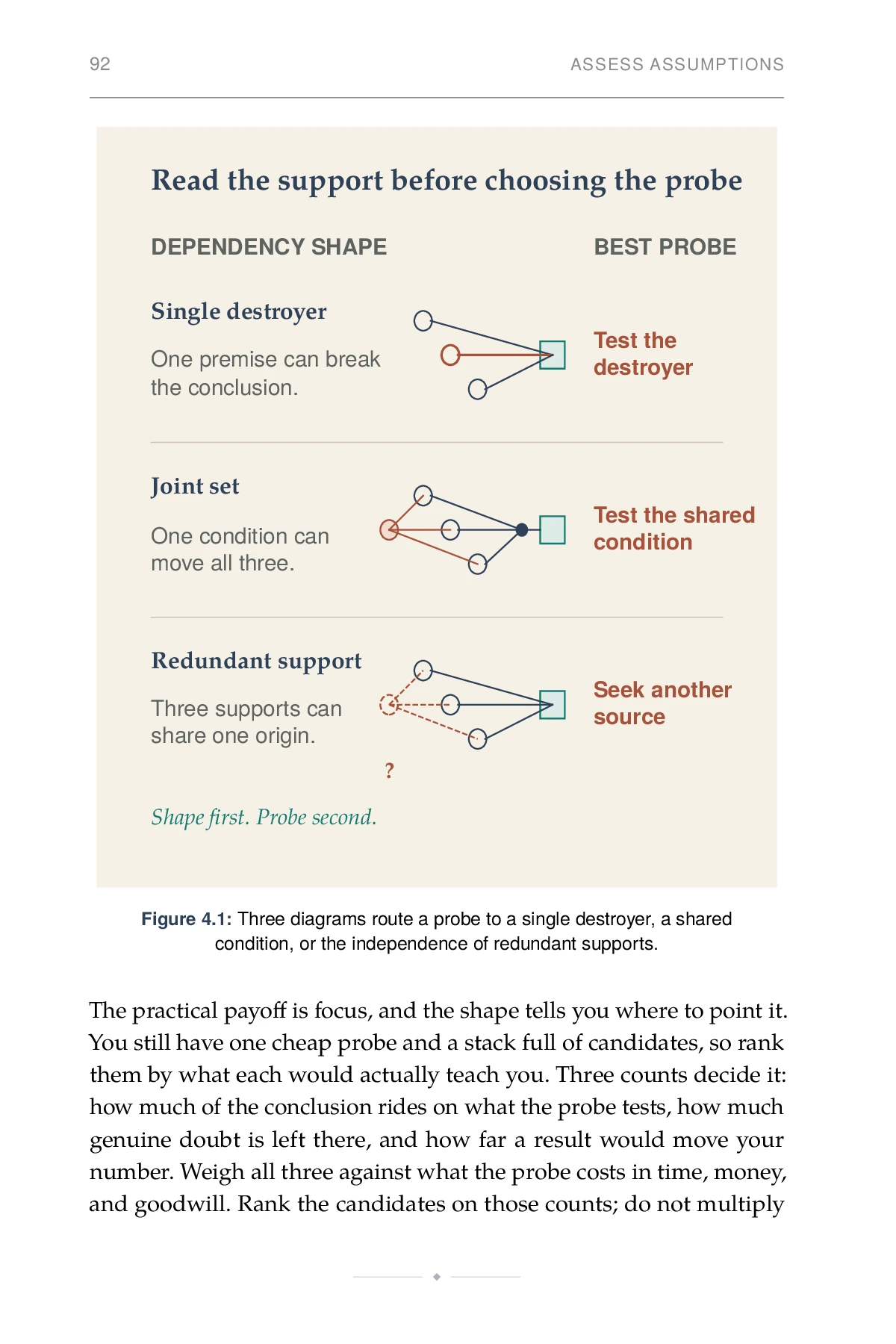
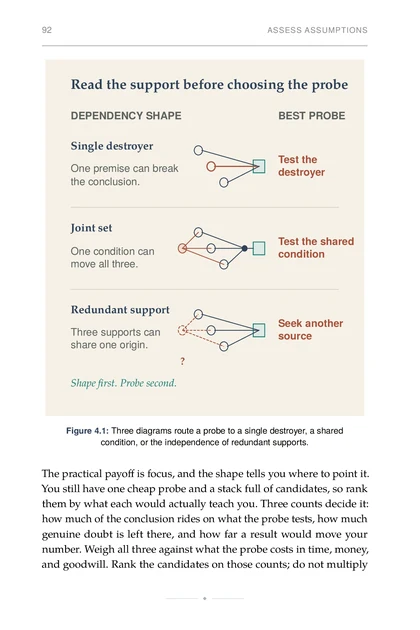 Three diagrams route a probe to a single destroyer, a shared
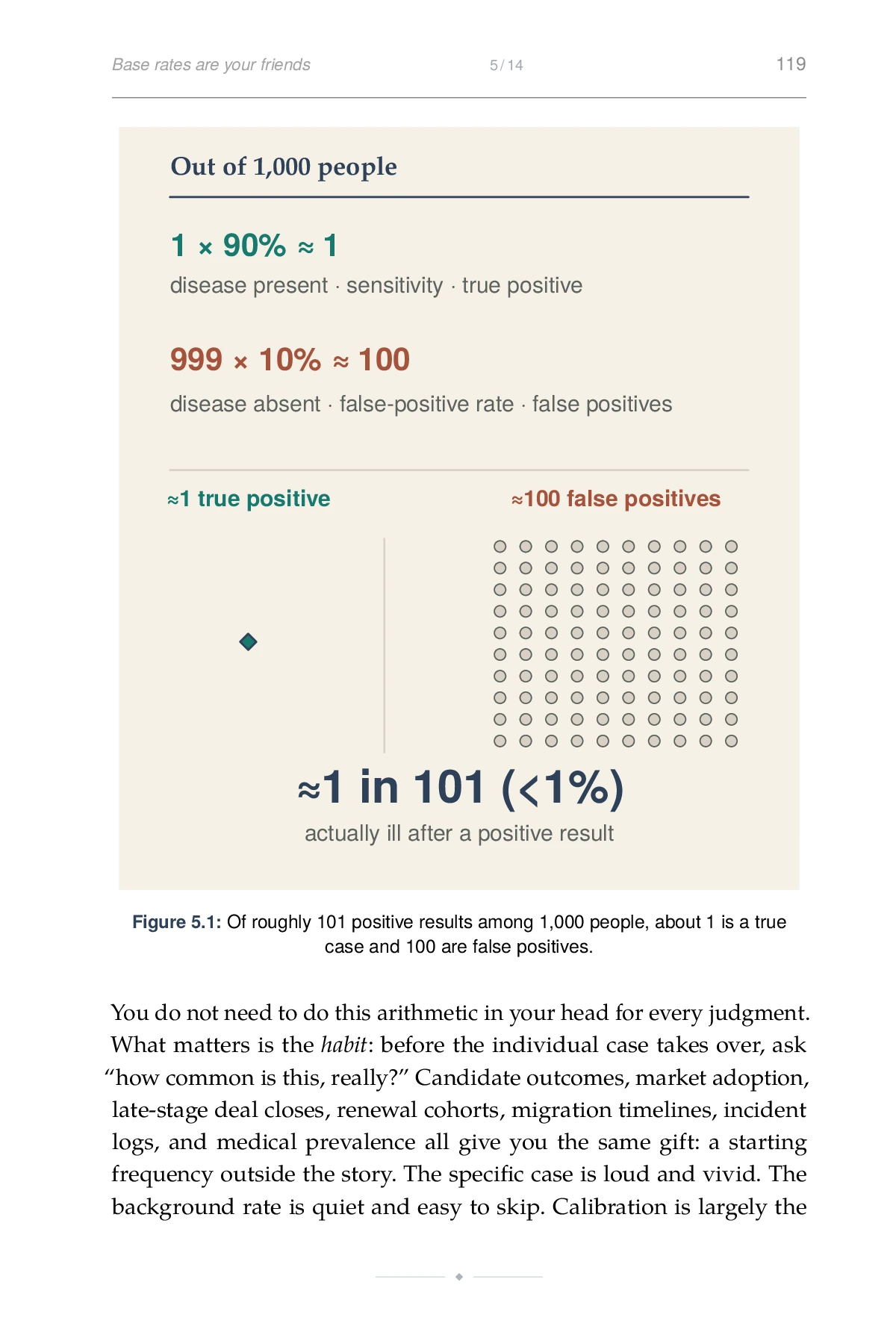
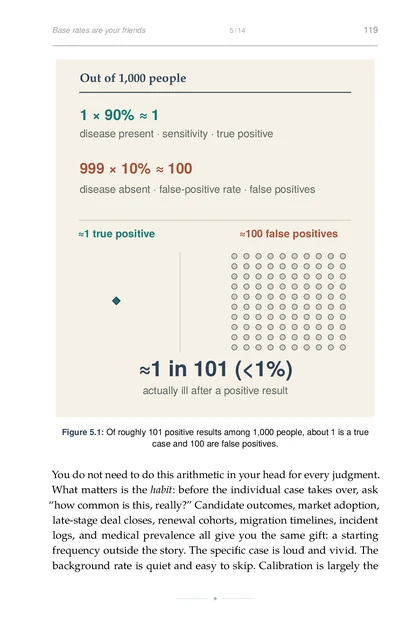 Of roughly 101 positive results among 1,000 people, about 1 is a true
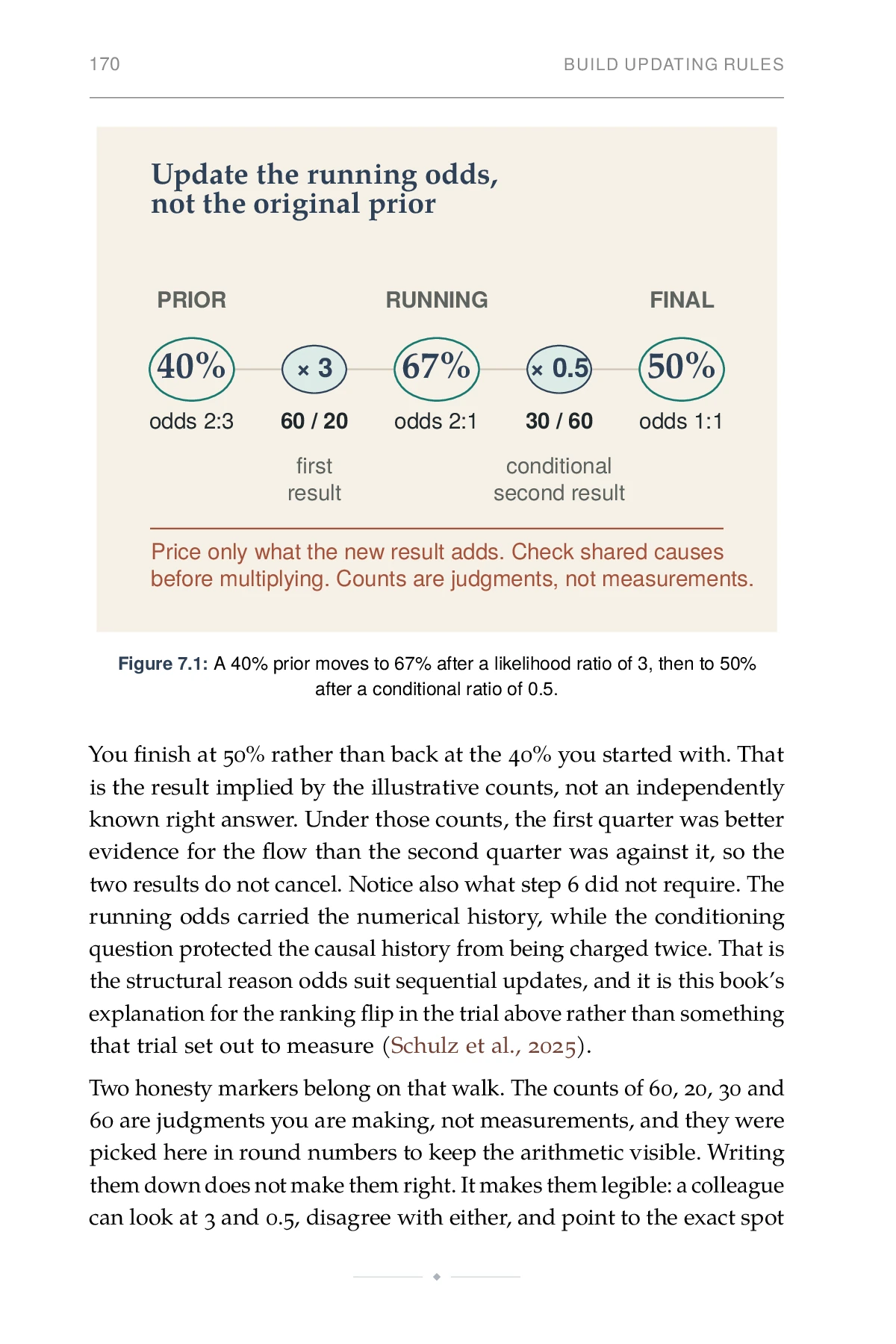
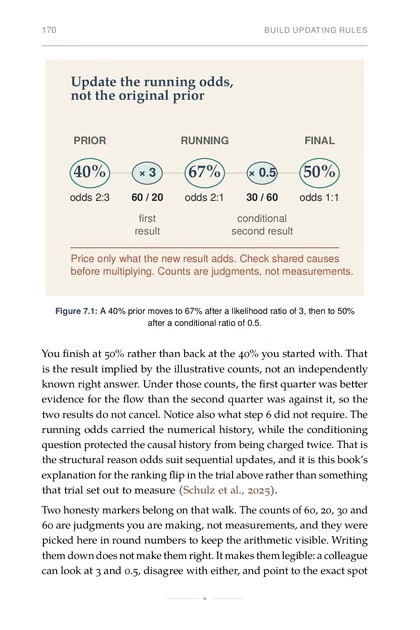 A 40% prior moves to 67% after a likelihood ratio of 3, then to 50%
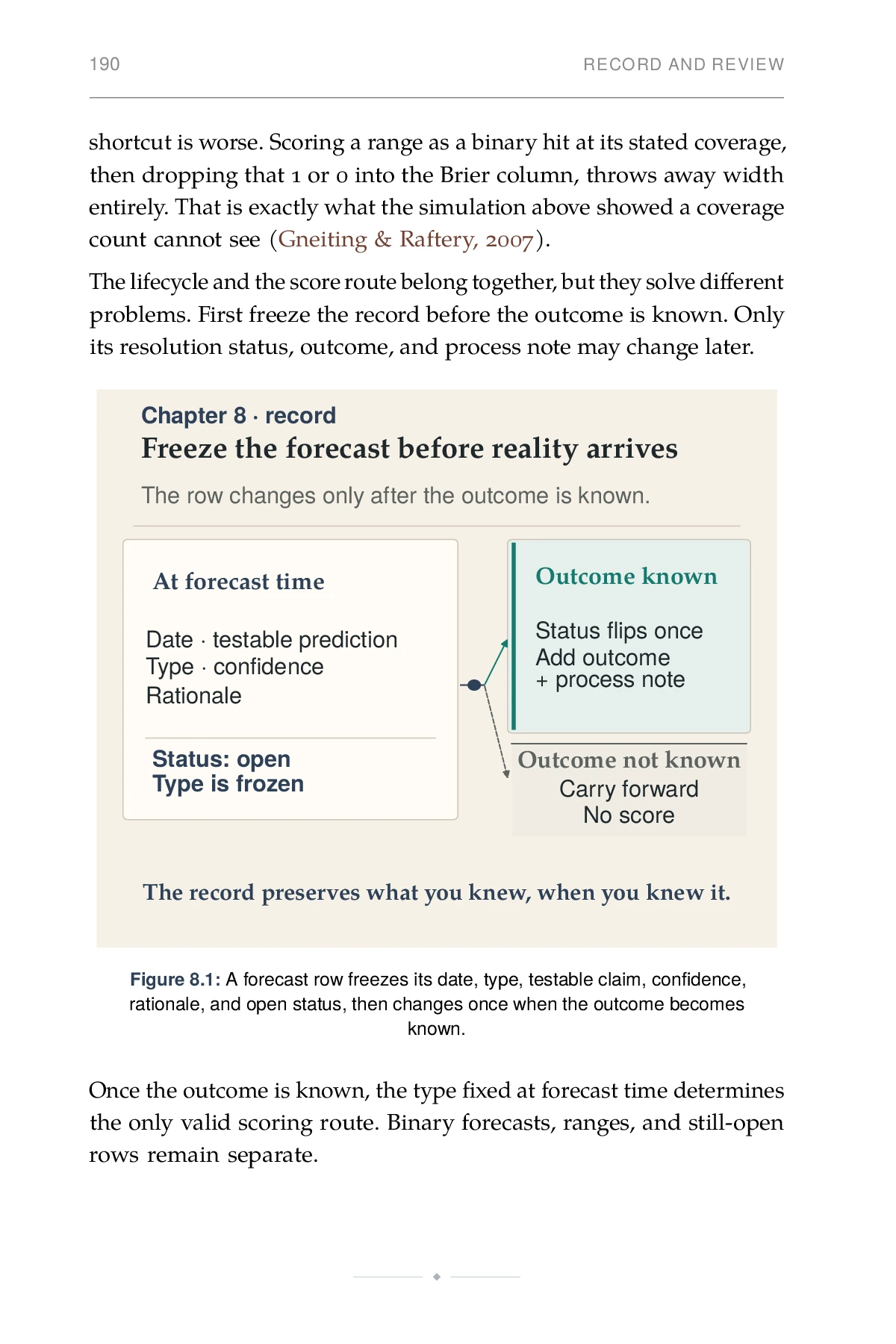
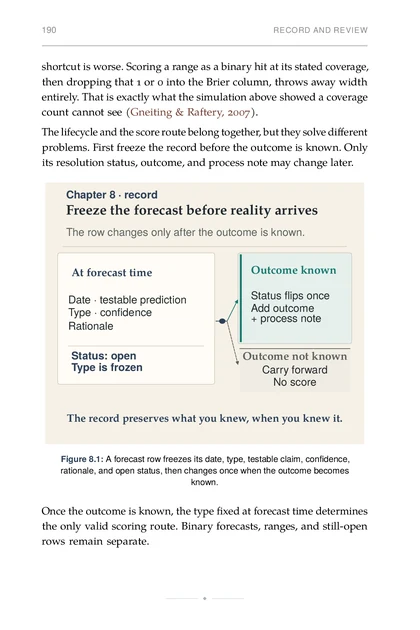 A forecast row freezes its date, type, testable claim, confidence, rationale, and open status, then changes once when the outcome becomes
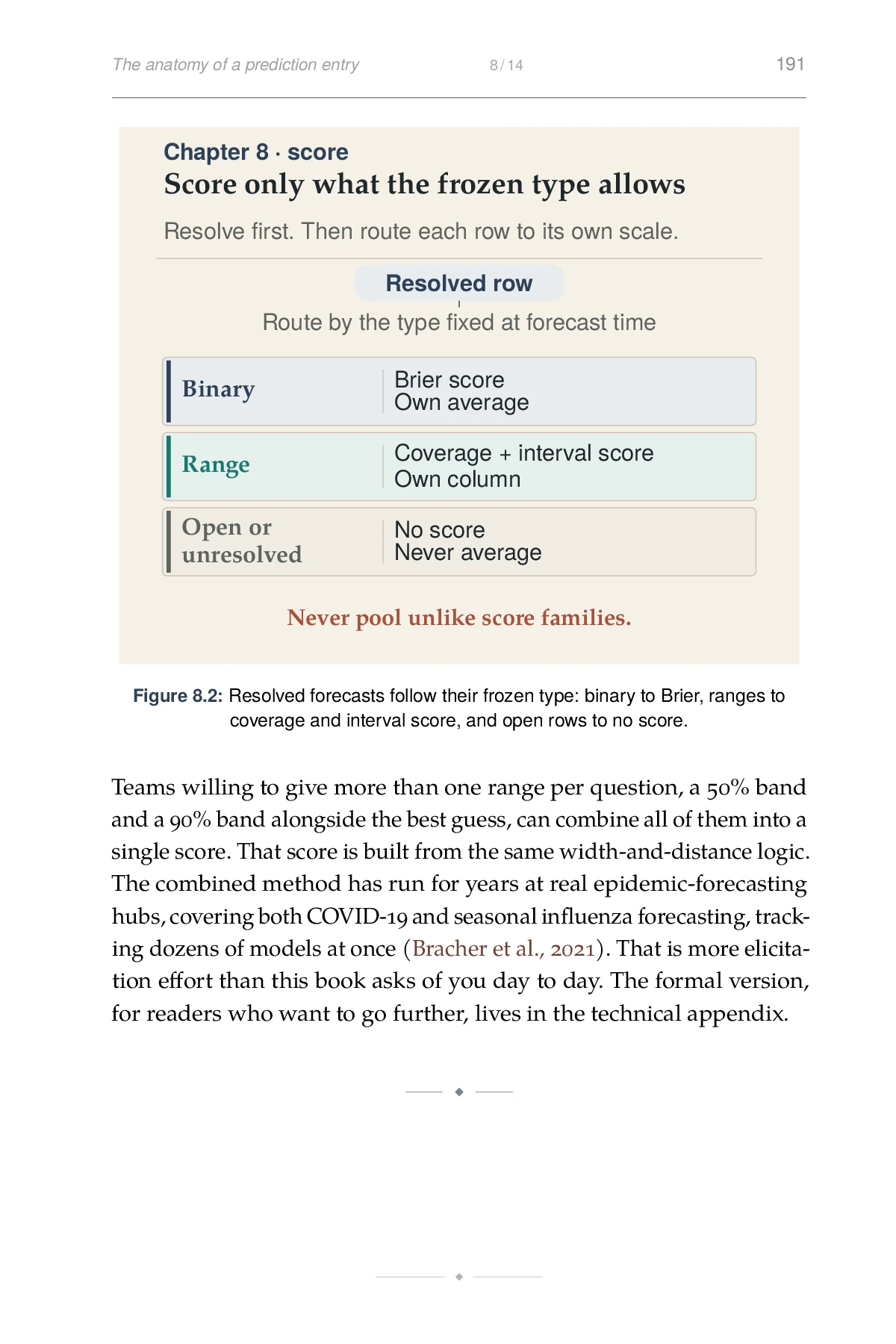
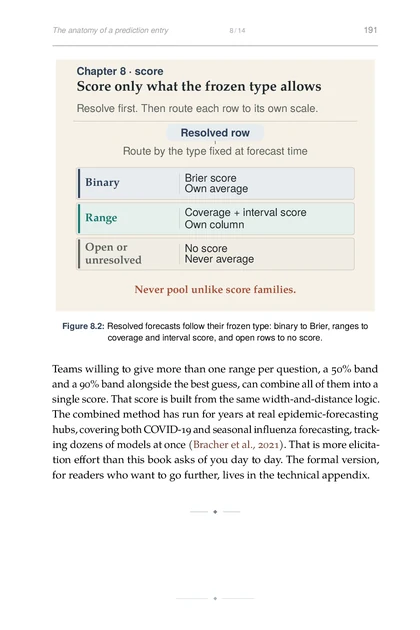 Resolved forecasts follow their frozen type: binary to Brier, ranges to
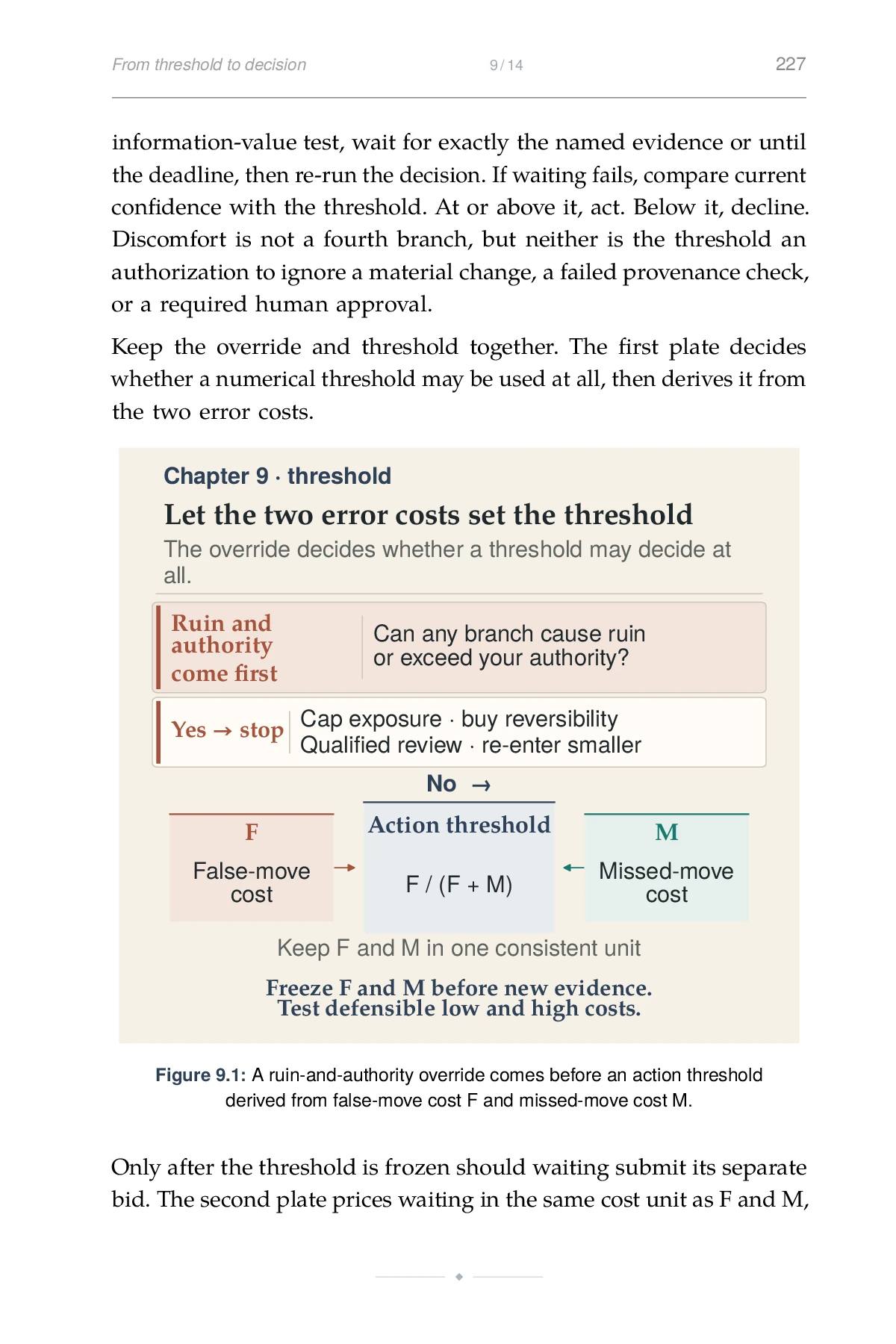
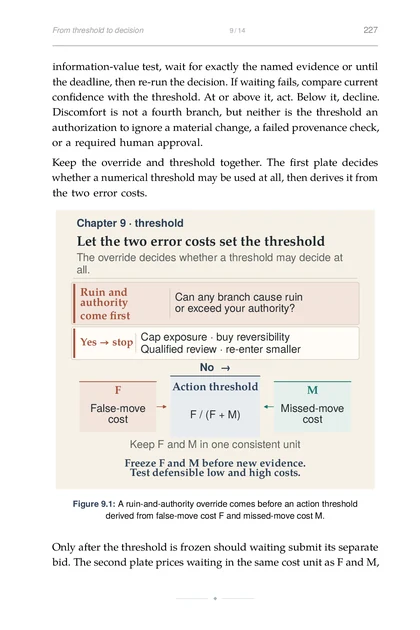 A ruin-and-authority override comes before an action threshold
Purchase takes place on Amazon, not on this website.
Buy the paperback on AmazonFrom the book
Read a page
Introduction
Introduction: The Calibration Problem
You cannot tell whether your certainty matches reality. That is a structural problem rather than a character flaw, and it has a structural solution.
What you get
What you get
- The CALIBRATE system: nine operational skills you run on any judgment
- Bayesian reasoning in plain language, with no formulas required
- Decision hygiene: pre-mortems, reference classes, prediction journals
- Calibration training exercises and worksheets in every chapter
- A repeatable protocol for daily operations through to strategic bets
Who it's for
- Run a process when you must judge and do not know how sure you should be
- Update confidence when new information lands, without overreacting
- Tell trusted judgments from the ones you should still question
- Track calibration over time so confidence has to earn its accuracy
- Communicate uncertainty to a team without sounding indecisive
Who it's for
Who this book was written for
This is not forecasting for hobbyists or a tour of cognitive biases you will forget by Friday. It is operator-grade epistemics: protocols you can run on a live call, with partial data, when a decision is due and being wrong is expensive.
The result is not a person who hedges everything. It is an operator whose confidence means something: strong when the evidence is strong, provisional when it is thin, and honest enough to move when it changes.
If your decisions carry real stakes and you are done mistaking volume for accuracy, this is the instrument you have been deciding without.
The reader it was written for
Founders, strategists, and operators who make high-stakes calls with incomplete information and keep rounding “pretty sure” up to certain.
Also a fit for
Managers, analysts, advisors, and researchers whose work is evaluating evidence and stating a recommendation under uncertainty.
What you will use it on
- Run a process when you must judge and do not know how sure you should be
- Update confidence when new information lands, without overreacting
- Tell trusted judgments from the ones you should still question
- Track calibration over time so confidence has to earn its accuracy
- Communicate uncertainty to a team without sounding indecisive
Probably not for you if
- The absolute sceptic who believes no judgment can be trusted
- Anyone seeking a clinical diagnosis
- Readers looking for believe-in-yourself self-help
The contents
Chapter by chapter
Every chapter of The Calibrated Mind with its printed epigraph, what you can do afterwards, and the moment it is built for.
Introduction
Introduction: The Calibration Problem
You cannot tell whether your certainty matches reality. That is a structural problem rather than a character flaw, and it has a structural solution.
Chapter 1
The Certainty Trap
Certainty signals that your mind has committed to a binary answer, not that the answer is accurate. Learning to tell the difference is the first step out of the trap.
Chapter 2
Maps and Territories
Everything you know about a complex situation is only a model, not the thing itself; the skill is to remember that while still using models.
Chapter 3
Calibrate Confidence
Confidence should be a measurement, not a feeling. Here is how to take your probability temperature, and start tracking whether it reads true.
Chapter 4
Assess Assumptions
Every judgment rests on a basement of hidden premises. You make the decision on the top floor, in the light. The premises sit in the dark below, holding up the whole structure. Surface them before they surface you.
Chapter 5
Lean on Probabilities
Probabilistic thinking is not a gift; it is a skill built from a small number of habits practiced until they become automatic.
Chapter 6
Investigate Alternatives
The best test of a belief is the best alternative you can construct against it, not more evidence that supports it.
Chapter 7
Build Updating Rules
Evidence should change your mind by a known amount. The skill is deciding how much before the result lands, while you can still be honest about it.
Chapter 8
Record and Review
Your memory is a story your mind tells to keep your confidence intact, not a record of your judgment. A prediction journal is the only scorecard that does not lie.
Chapter 9
Act with Appropriate Uncertainty
You do not need certainty to act. You need a threshold, and the discipline to use it.
Chapter 10
Teach and Extend
The fastest way to find the holes in your own calibration is to try to explain it to someone else. Teaching is the mechanism that produces understanding, not the reward you collect once you already have it.
Chapter 11
Evolve Your Model
Calibration is a practice, not a state. You never arrive. You only recalibrate. The final skill is the discipline of noticing your own drift and correcting it before it costs you.
Conclusion
Conclusion: The Calibrated Life
Calibration is an orientation to knowing, practiced one judgment at a time for the rest of your life. You never finish learning it.
Editions
Editions and specifications
| Edition | Formats | Chapters | Pages | Reading time | ISBN (paperback) |
|---|---|---|---|---|---|
| English The Calibrated Mind | Paperback, Hardcover | 13 | 286 | ± 4 hours | 9798190866223 |
| Dutch De gekalibreerde geest | Paperback, Hardcover | 13 | 304 | ± 4 hours | 9798190896510 |
Both editions are written natively. The Dutch text is not a machine translation of the English. · Trim size: 6x9″
Get the book
One title, every Amazon marketplace. Pick your format and your store.
Get the book
Reading from another country?Pick your own Amazon marketplace — same edition, your store.
Amazon links may include affiliate tags. That does not change the price you pay. Bol.com listings are third-party.
Frequently asked
What readers usually want to know
What is The Calibrated Mind about?
CALIBRATE gives operators repeatable practices for matching confidence to evidence, updating beliefs as facts change, and acting without pretending uncertainty is gone. The subtitle is: How to Hold Judgments at Their Right Strength Under Uncertainty.
What is the CALIBRATE framework?
CALIBRATE: Calibrate confidence, Assess assumptions, Lean on probabilities, Investigate alternatives, Build updating rules, Record and review, Act with appropriate uncertainty, Teach and extend and Evolve your model. nine operational skills you run on any judgment
In which formats is The Calibrated Mind available?
The Calibrated Mind ships as Paperback and Hardcover, on every Amazon marketplace worldwide.
Is there a Dutch edition?
Yes. The Dutch edition is De gekalibreerde geest, written as a native edition rather than a machine translation. It is available on Amazon too.
How long is The Calibrated Mind?
This edition runs 13 chapters, 286 pages in print and roughly 4 hours of reading.
Who is The Calibrated Mind for?
If your decisions carry real stakes and you are done mistaking volume for accuracy, this is the instrument you have been deciding without.
This will slow me down when I need to act fast.
Calibration is a threshold, not a committee. You do not need certainty to act. You need a number, a stop rule, and the discipline to use them.
Probabilities feel fake in my domain.
“Likely” is already a bet; it just hides three different ones. The book puts a real probability on the read so you can see whether it was earned.
Is this just another cognitive-bias checklist?
Bias lists tell you that you are wrong. CALIBRATE is a practice: prediction journal, updating rules, and a scorecard that does not flatter you.
I am already self-aware. Is this for me?
Self-awareness without a scorecard is a feeling. The book is for people who want their confidence to match the evidence, not their narrative.
This sounds academic. I need something practical.
No formulas. Nine named skills you can run on a hiring call, a product bet, or a board decision. Paperback and hardcover are live; there is no Kindle edition yet.
The production system
How this book was made
Every title moves through the same gated production line: sourced research, a claim-level evidence ledger, structural review, fact-checking, red-team critique, and a bilingual final edit. AI agents do specialist work inside those gates; judgment, voice, and accountability stay human.
- Claims enter an evidence ledger with a source and a confidence grade before they reach the page
- English and Dutch are two native editions, not a translation of one another
- Every chapter clears readability, rhythm, and style gates before it is typeset
Terminology
Books


