

No. 14 · Early draft · Decisions & philosophy · STOIC
Stoic Systems for Decision-Making
A Practical Framework for Clear Judgment Under Pressure
Every decision you make without a system is decided by something else
Stoicism was never a set of quotes. It was a working discipline for governing judgment under pressure, and this book translates it into the STOIC framework: Selective Attention, Temporal Distance, Outcome Detachment, Intentional Architecture, and Continuous Review. Five ancient practices become five modern skills, grounded in decision science, for operators tired of making high-stakes calls on instinct. This is not inspiration. It is infrastructure.
- pages
- 252
- chapters
- 12
- hours of reading
- ± 4
- editions
- EN · NL
- Design
- Drafting
- Manuscript
- Production
- Launched
The editions
Kindle, Paperback and Hardcover
Production shots of the editions. Not for sale yet — this page is the public working version.
-
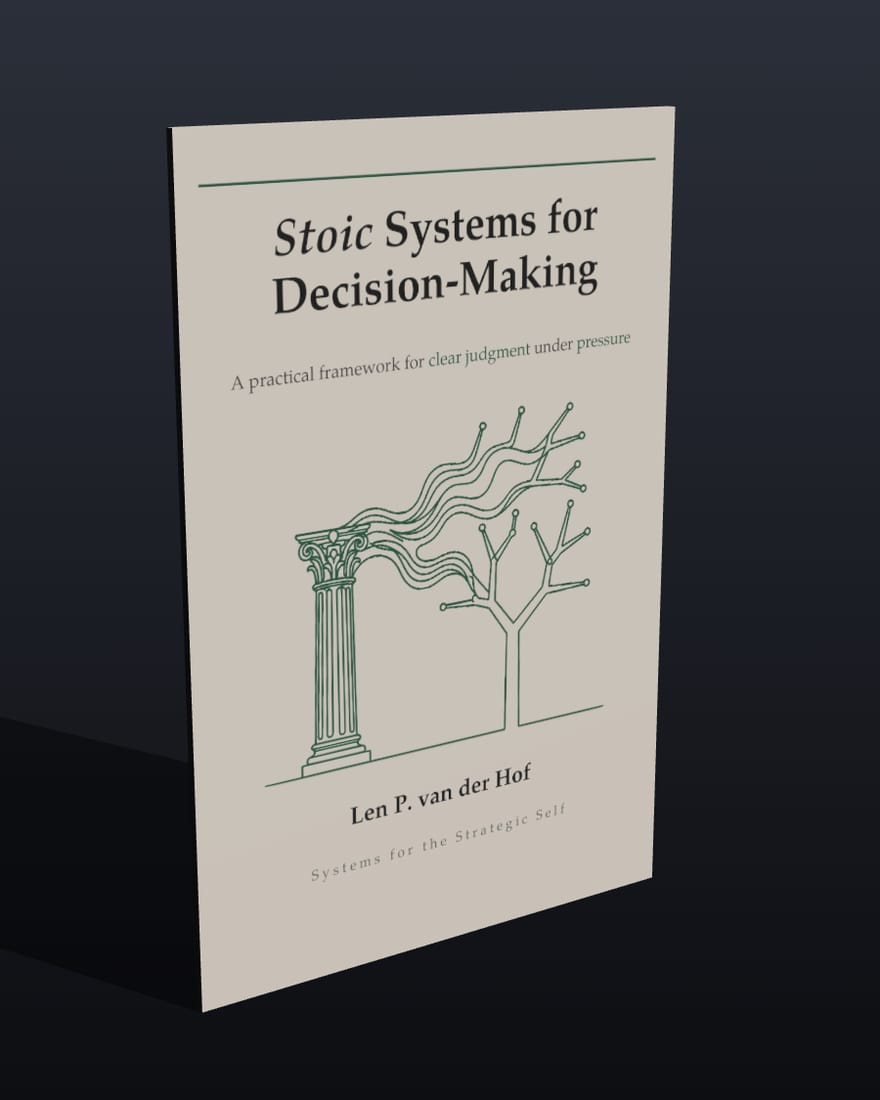
Kindle
The digital edition, ready in any Kindle app.
-
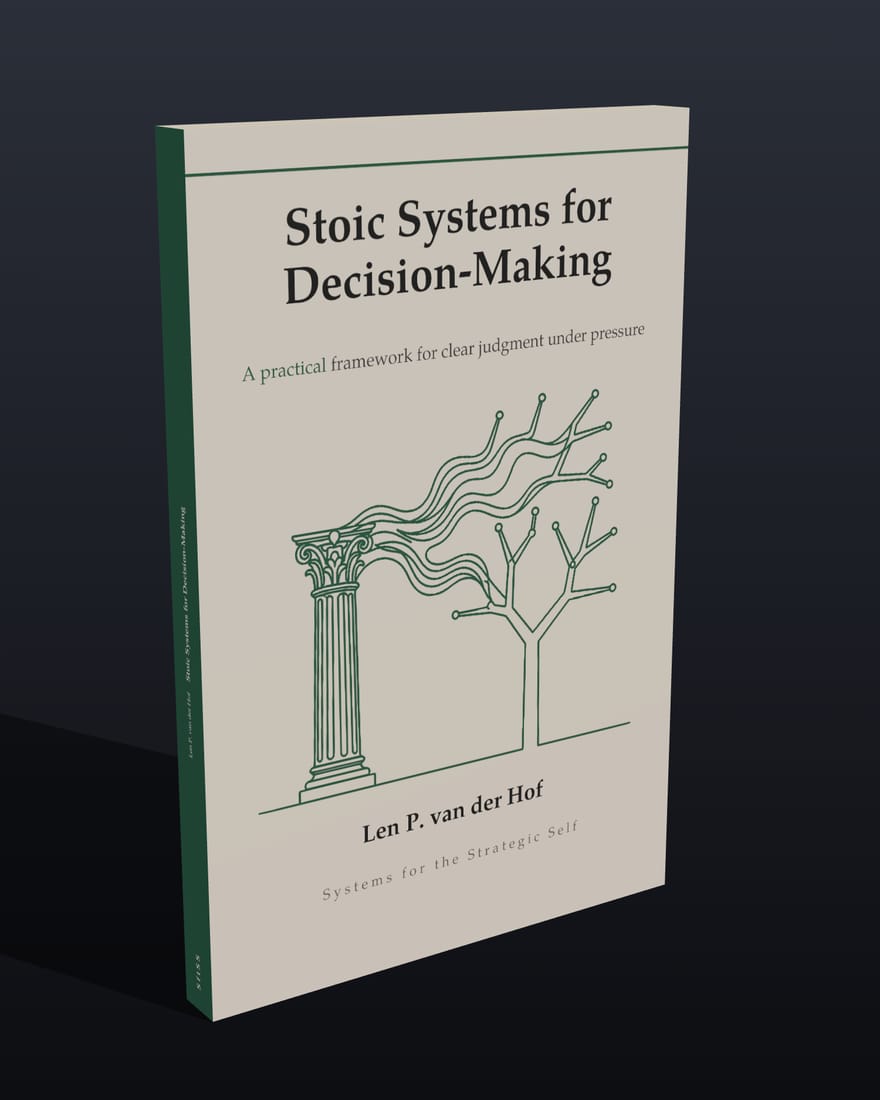
Paperback
The working copy. Mark it up. Take it into the meeting.
-
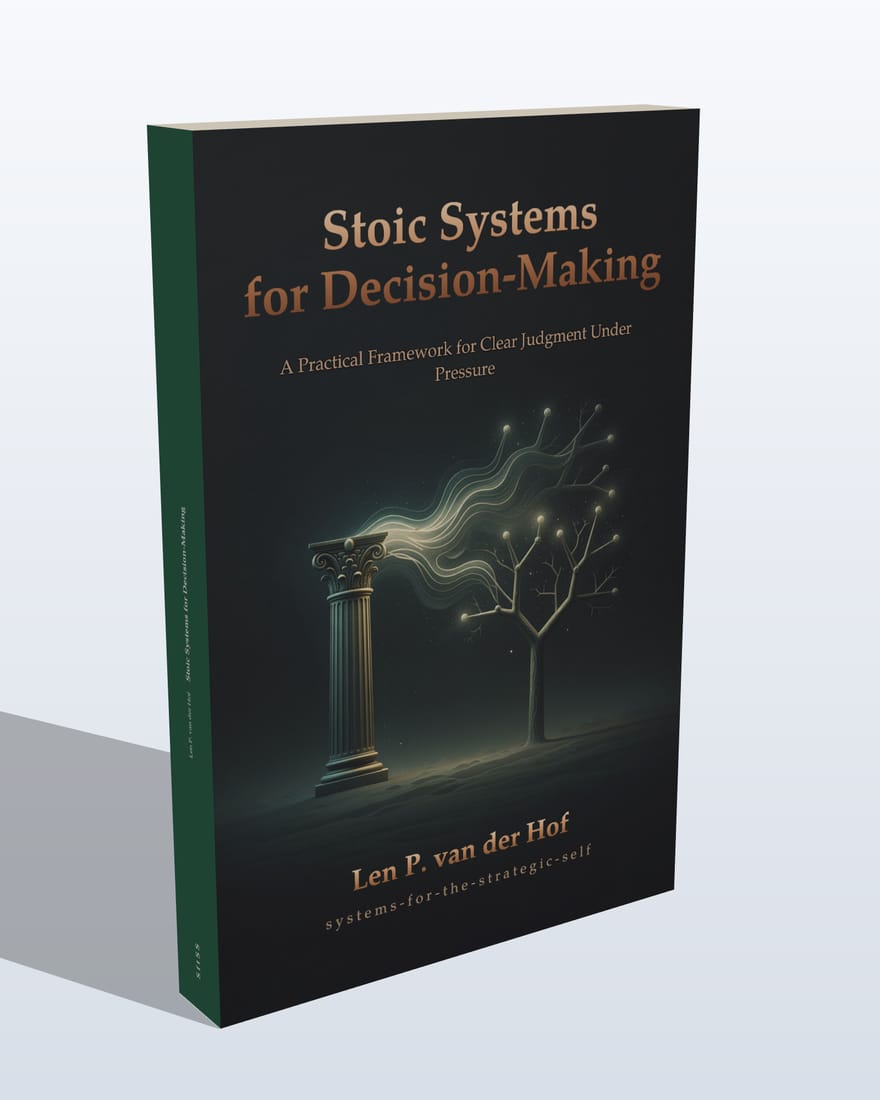
Hardcover
The shelf edition. Dark full-art jacket, built to stay in the room.


The book
A Practical Framework for Clear Judgment Under Pressure
Every decision you make without a system is decided by something else. Fear of the downside. Ego defending a past call. Exhaustion at 11 p.m. You analyze until the window closes, commit while emotion is still steering, and repeat the error because nothing reviewed it. The choice felt like a verdict on who you are, so you defended the position instead of reading the evidence.
The usual advice is to trust your gut and decide faster. That holds until the stakes are real, and then instinct is the system that got you here.
Stoic Systems for Decision-Making treats Stoicism as what it always was: not a mood, not a wall of quotes, but a technical discipline for governing judgment under pressure. Marcus Aurelius was not journaling. He was running a protocol. This book reconstructs that protocol as STOIC: five trainable skills, grounded in modern decision science, that install good judgment as infrastructure rather than hope.
What you learn
What this book puts in your hands
- The STOIC framework: five trainable skills that replace instinct with a repeatable decision system
- Selective Attention and Temporal Distance to stop reactive mode and emotional override
- Outcome Detachment to separate your judgment, your identity, and the result
- Intentional Architecture: pre-commitments and defaults so you stop re-deciding everything
- Continuous Review that turns experience into compounding judgment, not rehearsed error
The framework
STOIC, step by step
five trainable skills that replace instinct with a repeatable decision system
-
S=Selective Attention
-
T=Temporal Distance
-
O=Outcome Detachment
-
I=Intentional Architecture
-
C=Continuous Review
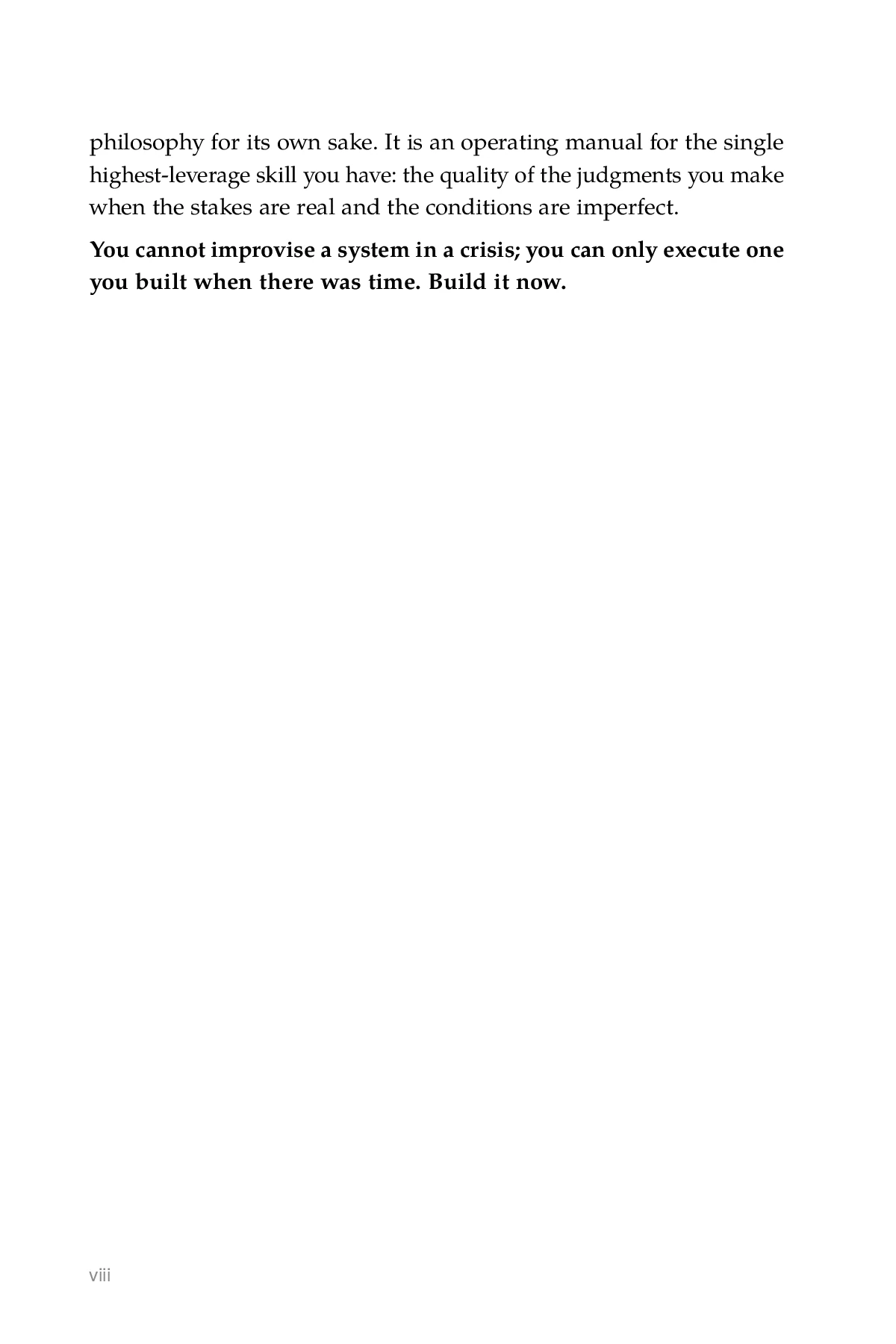
From the book
highest-leverage skill you have: the quality of the judgments you make
Stoic Systems for Decision-Making, printed page: highest-leverage skill you have: the quality of the judgments you make
Inspect more pagesLook inside
Pages from the print edition.
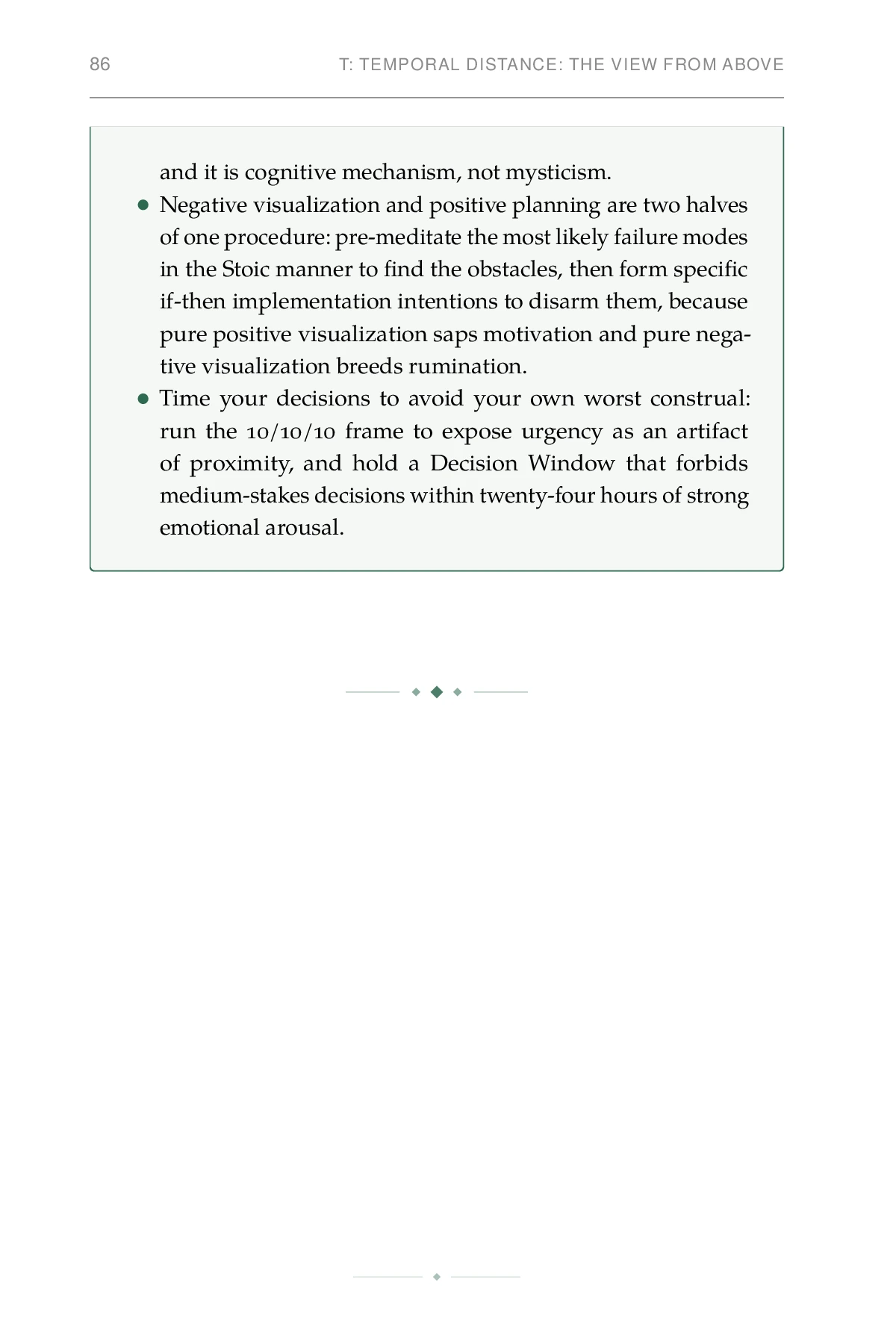
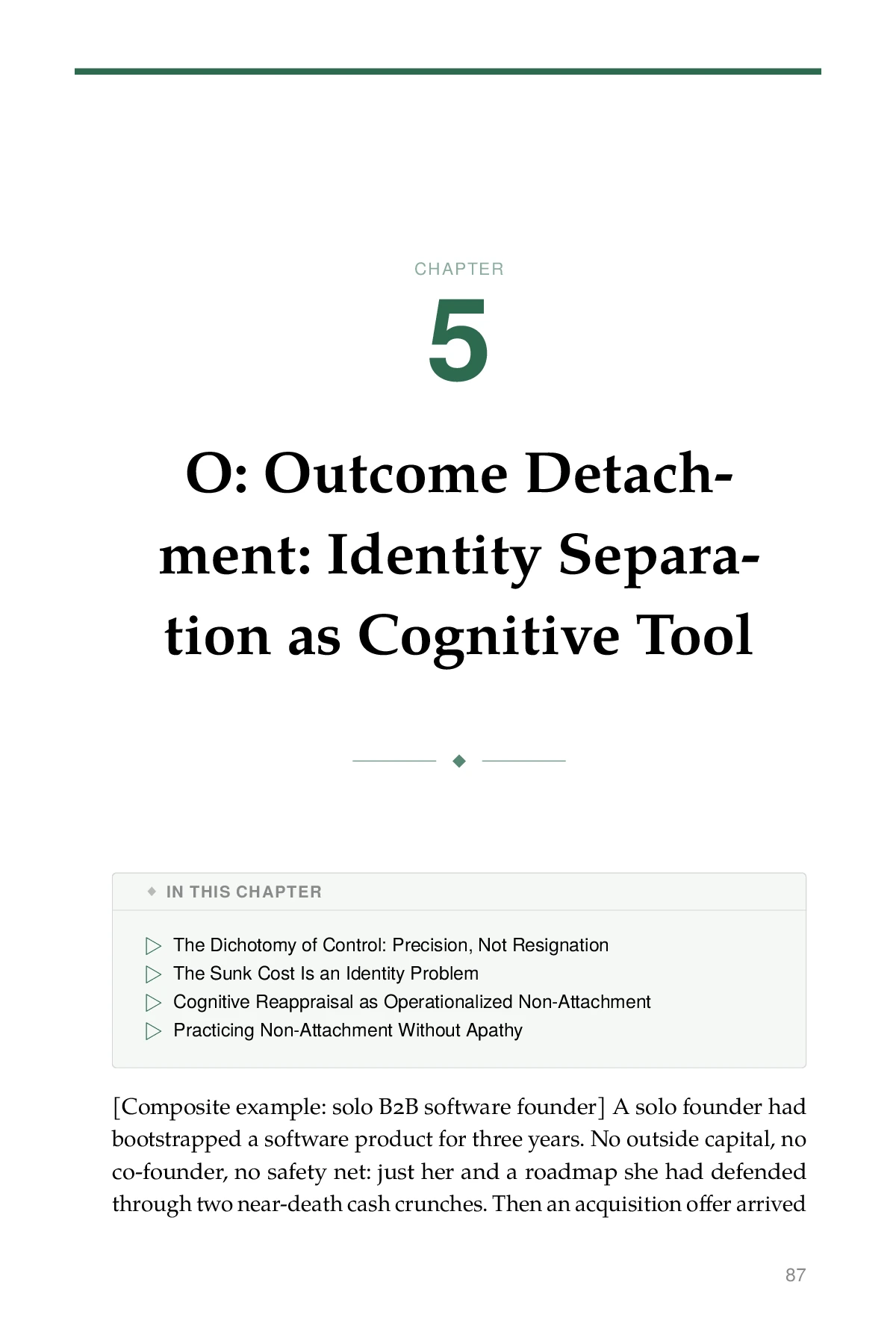
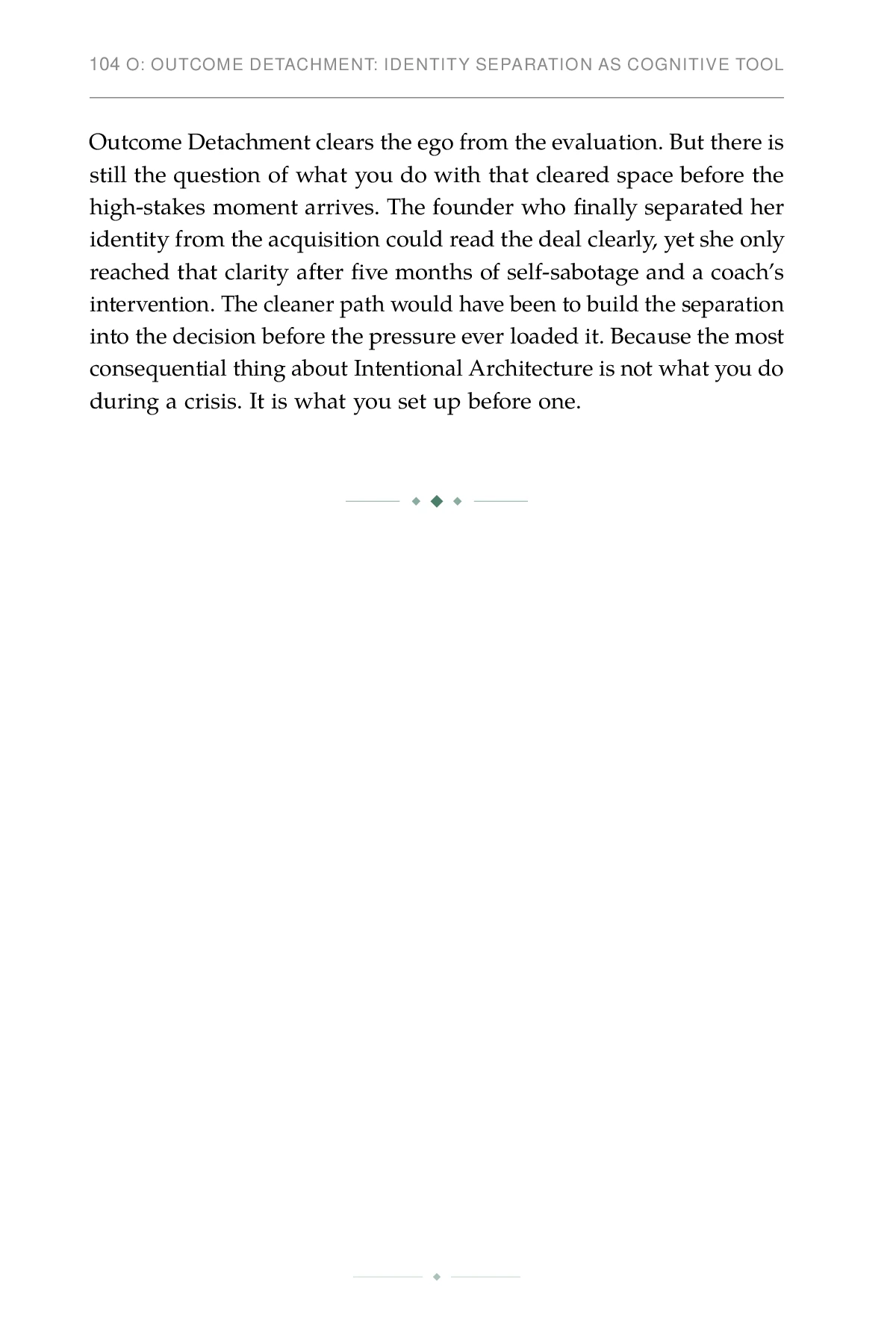
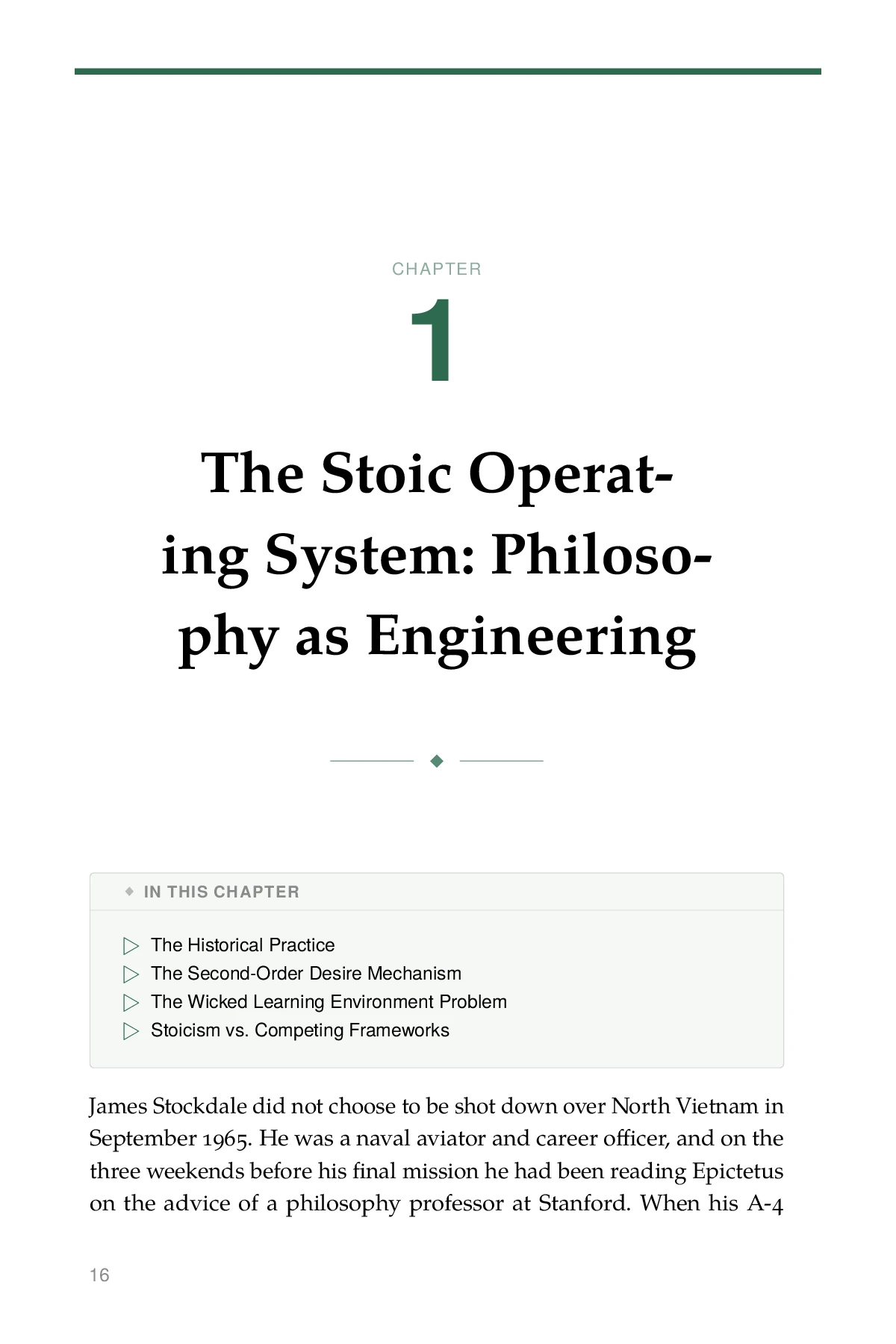
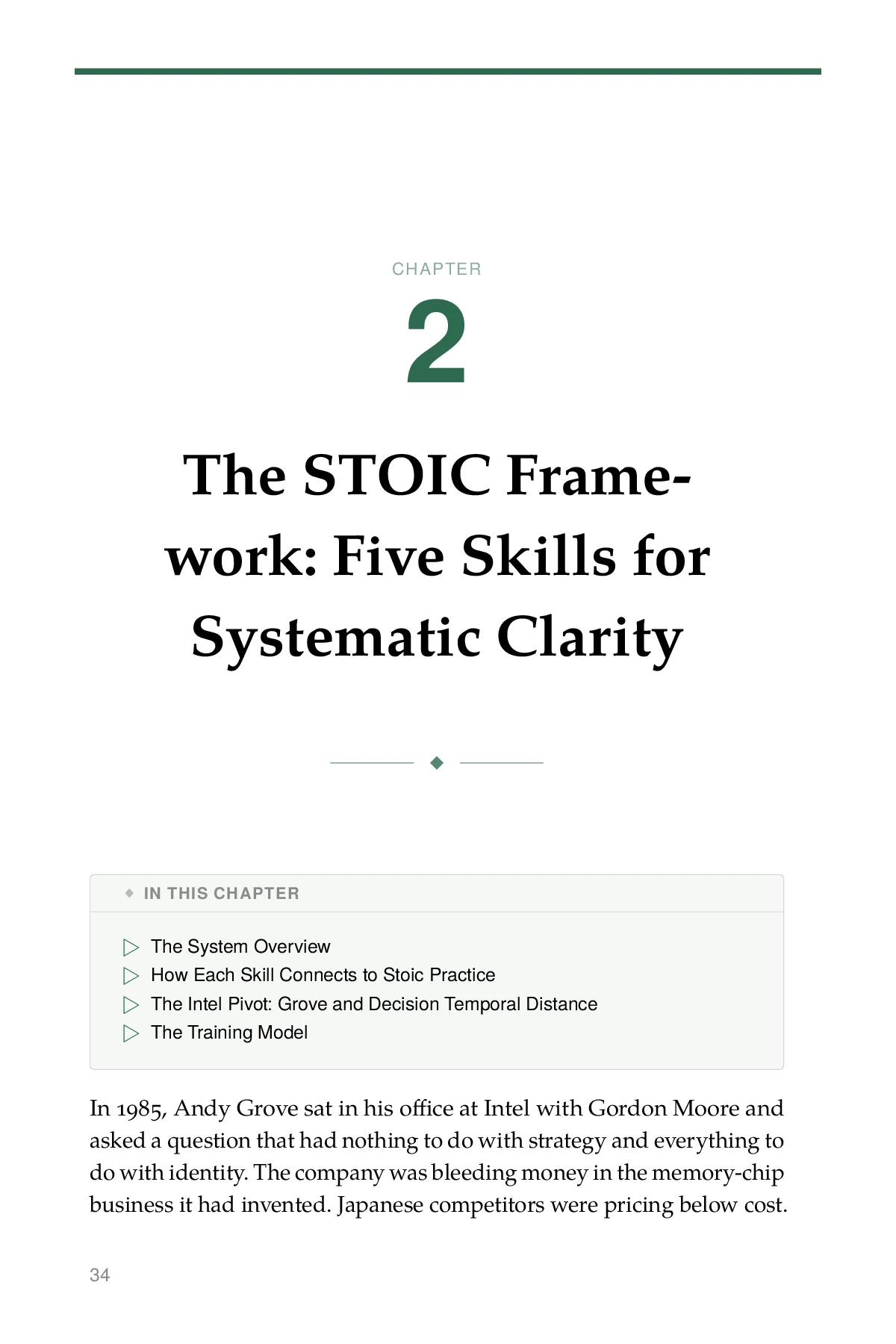
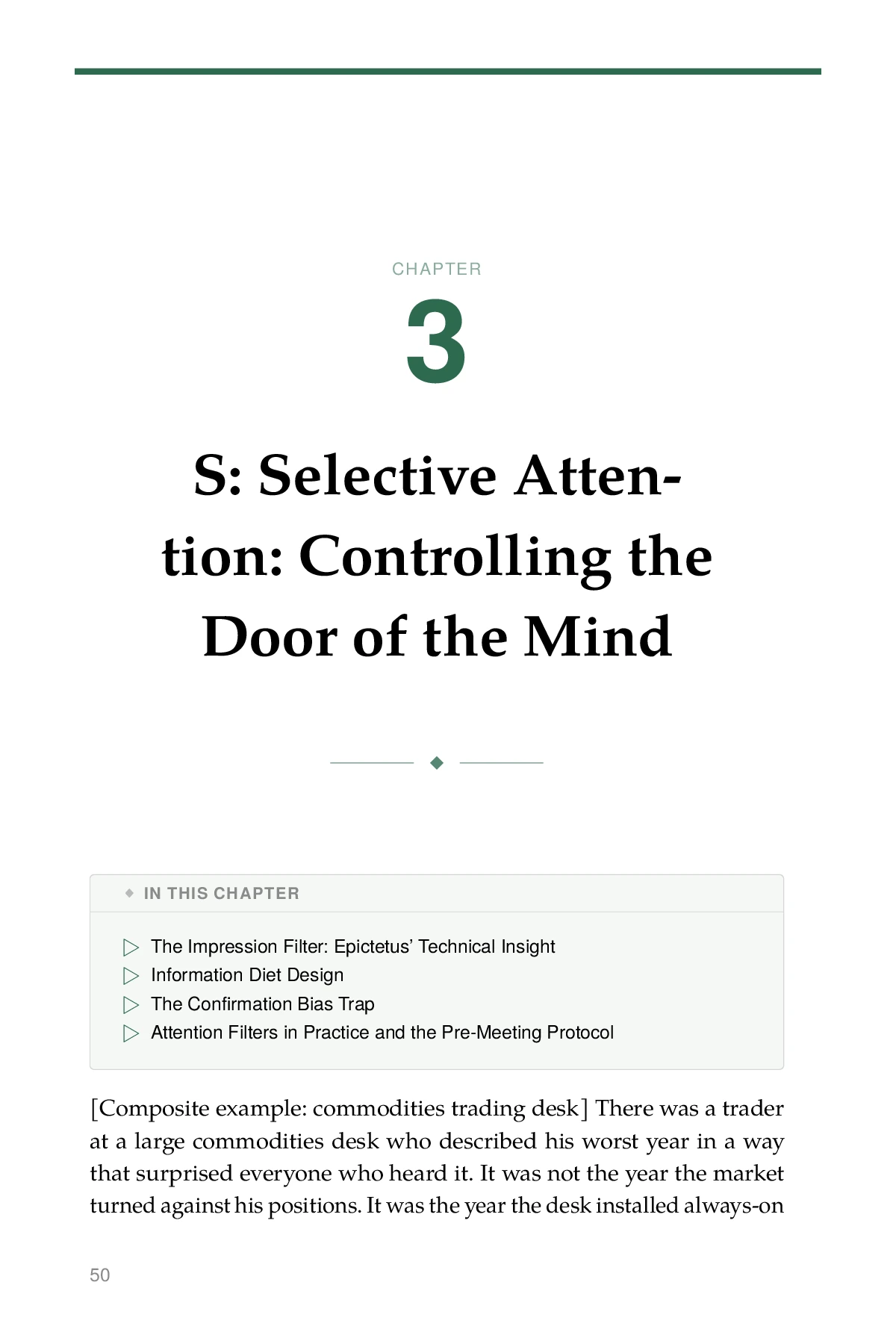
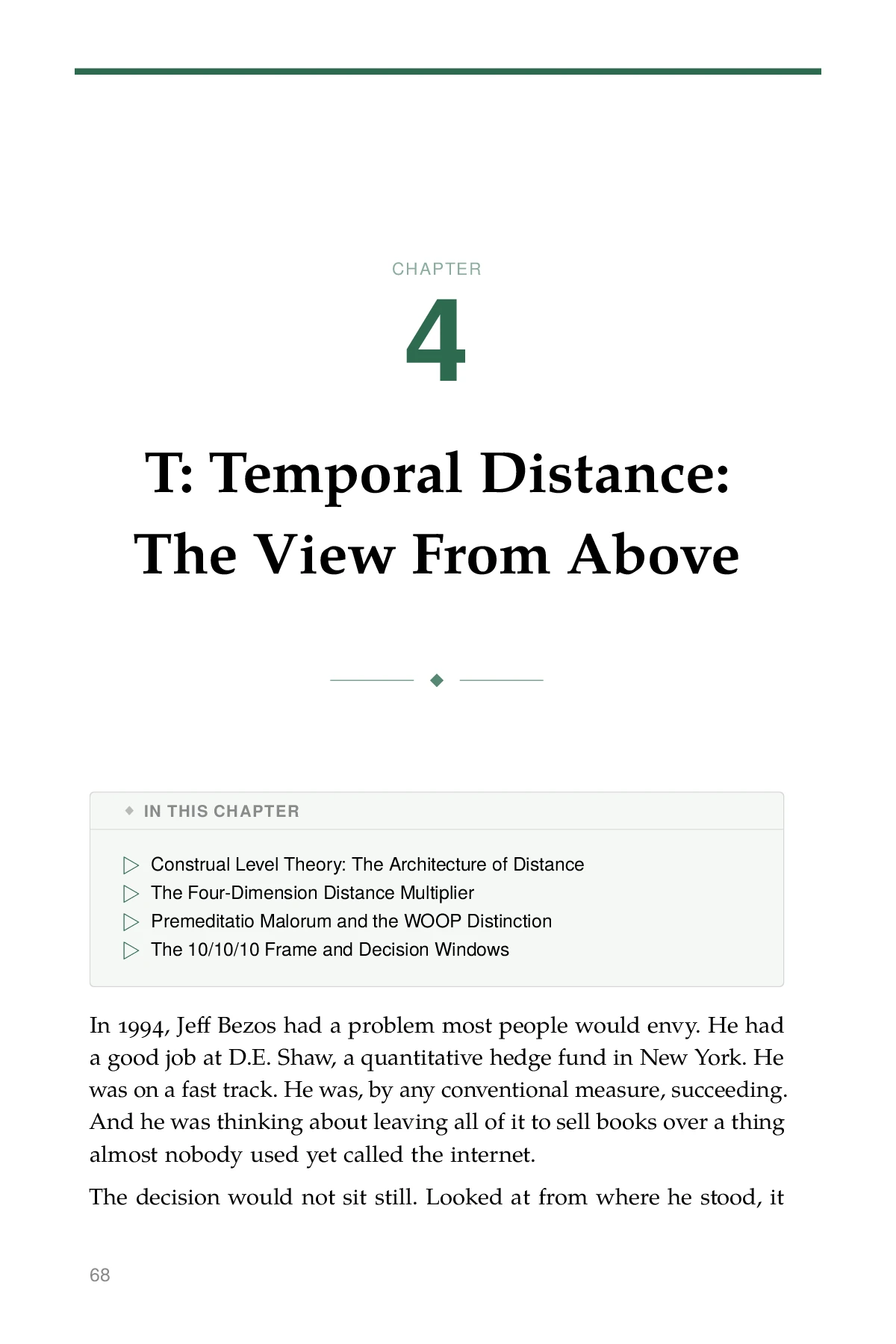
The contents
Chapter by chapter
Every chapter of Stoic Systems for Decision-Making with its printed epigraph, what you can do afterwards, and the moment it is built for.
Introduction
Introduction: The Decision Crisis
Chapter 1
The Stoic Operating System: Philosophy as Engineering
Chapter 2
The STOIC Framework: Five Skills for Systematic Clarity
Chapter 3
S: Selective Attention: Controlling the Door of the Mind
Chapter 4
T: Temporal Distance: The View From Above
Chapter 5
O: Outcome Detachment: Identity Separation as Cognitive Tool
Chapter 6
I: Intentional Architecture: Building the System Before the Pressure
Chapter 7
C: Continuous Review: Manufacturing Wisdom in a Wicked Domain
Chapter 8
Assembling the Protocol: The STOIC Decision System in Practice
Chapter 9
Decision-Making Under Pressure: The STOIC System in Crisis
Chapter 10
Team Decisions: Architecture for Group Clarity
Conclusion
Conclusion: The Decision Constitution
Who it is for
Who this book was written for
The result is not a calmer person who decides the same way. It is an operator whose judgment holds when the runway is short, the data is thin, and the room is waiting.
If you are tired of deciding on instinct and calling the wreckage experience, this is the system you have been improvising without.
The reader it was written for
The deliberate operator — a founder, executive, or senior leader (typically 30–50 years old) who makes high-stakes decisions with incomplete information and limited time. They have moved past the "hustle" phase and now face the psychological weight of responsibility: hiring/firing, capital allocation, strategic pivots, crisis response, and personal trade-offs.
Also a fit for
1. The coach/consultant — Executive coaches, leadership consultants, and strategy advisors who need robust mental models to teach clients. They want a book they can reference, quote, and use as a teaching tool. 2.
Probably not for you if
- **The academic philosopher** — Seeking textual exegesis, historical context, or comparative analysis of Hellenistic schools. This book uses philosophy as a tool, not as a subject of study.
- **The passive consumer** — Looking for inspirational quotes, "daily Stoic" emails, or feel-good motivation without structural work. This book requires active practice.
- **The clinical patient** — Seeking therapy for anxiety, depression, or trauma. The book is coaching/development, not treatment. It does not address clinical conditions.
- **The spirituality seeker** — Looking for meaning, transcendence, or religious guidance. The book is secular, rational, and operational.
Editions
Editions and specifications
| Edition | Formats | Chapters | Pages | Reading time | ISBN (paperback) |
|---|---|---|---|---|---|
| English Stoic Systems for Decision-Making | In production | 12 | 252 | ± 4 hours | — |
| Dutch Stoïcijnse systemen voor besluitvorming | In production | 12 | 268 | ± 4 hours | — |
Both editions are written natively. The Dutch text is not a machine translation of the English. · Trim size: 6x9″
Frequently asked
What readers usually want to know
What is Stoic Systems for Decision-Making about?
The STOIC framework translates ancient judgment practices into modern decision infrastructure: attention, distance, detachment, architecture, and review. The subtitle is: A Practical Framework for Clear Judgment Under Pressure.
What is the STOIC framework?
STOIC: S=Selective Attention, T=Temporal Distance, O=Outcome Detachment, I=Intentional Architecture and C=Continuous Review. five trainable skills that replace instinct with a repeatable decision system
Is there a Dutch edition?
Yes. The Dutch edition is Stoïcijnse systemen voor besluitvorming, written as a native edition rather than a machine translation. It moves through the same production line.
How long is Stoic Systems for Decision-Making?
This edition runs 12 chapters, 252 pages in print and roughly 4 hours of reading.
Who is Stoic Systems for Decision-Making for?
If you are tired of deciding on instinct and calling the wreckage experience, this is the system you have been improvising without.
The production system
How this book was made
Every title moves through the same gated production line: sourced research, a claim-level evidence ledger, structural review, fact-checking, red-team critique, and a bilingual final edit. AI agents do specialist work inside those gates; judgment, voice, and accountability stay human.
- Claims enter an evidence ledger with a source and a confidence grade before they reach the page
- English and Dutch are two native editions, not a translation of one another
- Every chapter clears readability, rhythm, and style gates before it is typeset
The series
More in this theme


