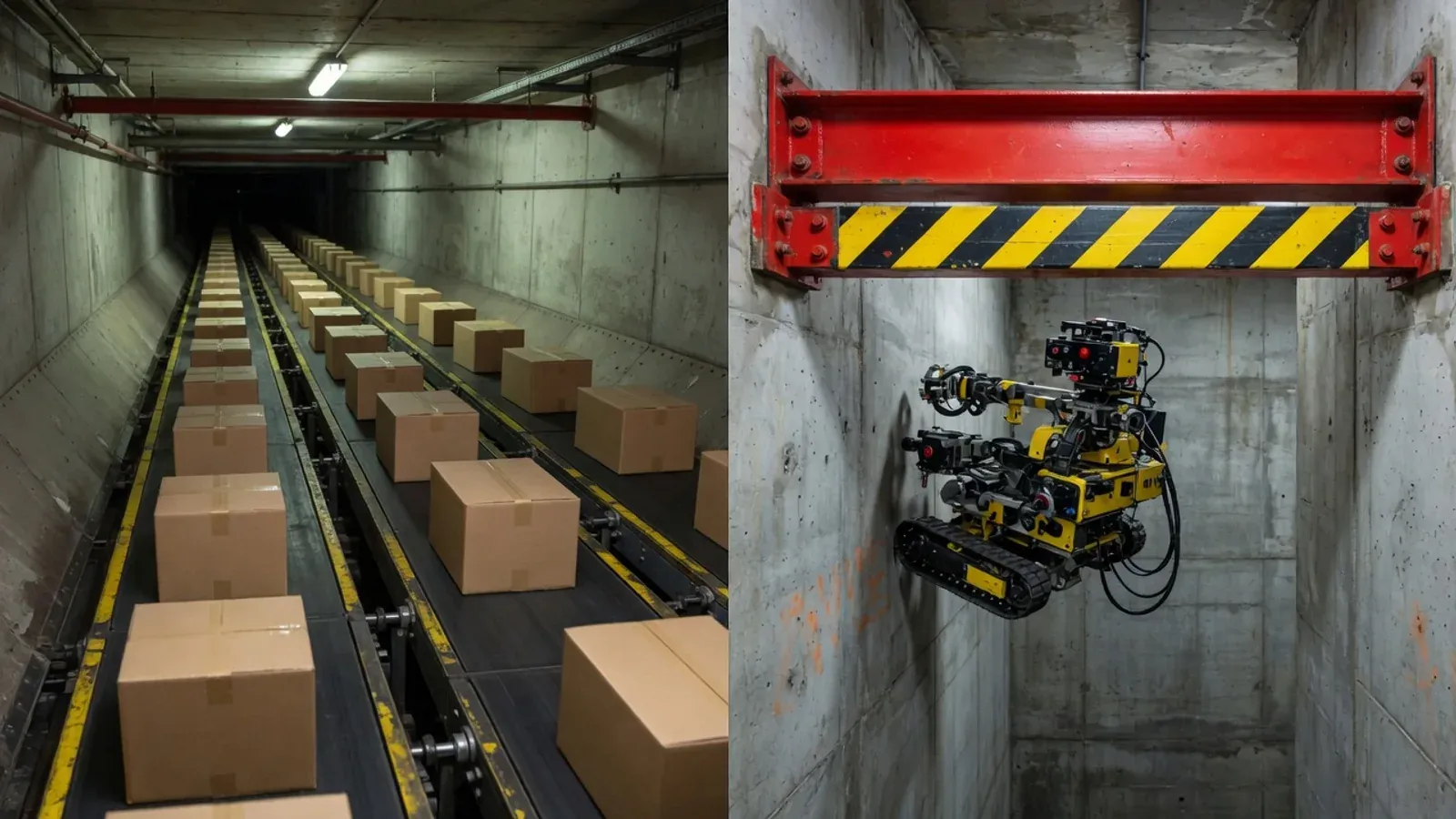
A founder wires a model into a Zapier path and calls it an agentic workflow. The ticket still arrives. The fields still fill. Slack still pings. The only new thing is a sentence generator sitting on a rail. That is automation with a language model in one box. It is allowed. It is not an agentic workflow.
Two machines
An automation runs a fixed path. You can draw it. When it fails, it fails on a node you already named. A model may classify the ticket. The path does not invent a new path.
An agentic workflow holds a goal, uses tools, and may change the next step when a tool returns something messy. The diagram is a claim about intent, not a guarantee about the route. That is the useful part. It is also the dangerous part.
The definition page is the test for the worker. This page is the test for the path the worker is allowed to walk.
If the path cannot surprise you, keep calling it automation. Give it logging and an owner. Do not give it a charter you will not read.
If the path can surprise you, you now have a junior operator on a looping brief. Treat it that way or unplug it.
What has to be written down
Four artifacts. If any is missing, you do not have an agentic workflow. You have a demo that can spend money.
Goal. One sentence that survives more than one prompt. “Triage inbound” is not a goal. “Propose a next action for every inbound that matches the ICP, and stop on anything that spends, mails a customer, or changes production data” is a goal.
Charter. The same seven fields I use for a human role in CHORUS: purpose, inputs, outputs, authority ceiling, success criteria, review requirement, escalation. A worker without a charter is a guess you keep paying for.
Checkpoints. Short workflows, not one heroic pipeline. The Agentic Codebase is blunt here: turn the operation you rerun forty times a week into a versioned command, then chain those commands with named human gates. Serial where order matters. Fan-out where work can split. Fan-in where it must merge. A human gate where the next step can spend, speak as the company, or close a judgment you still own.
Packet. When work crosses a boundary, human to agent or agent to human, six fields travel: goal, constraints, inputs, provenance, acceptance, deadline. A paste from a chat log is not a packet. Constraints die in the paste.
The human in the loop is the person who can fail the output against the acceptance line. A spectator on a dashboard is not a loop.
Which workflows deserve an agent
Most paths should stay scripts. Invoicing. Provisioning. The Friday export. A model in those boxes is decoration until it starts inventing steps.
Use an agentic workflow when the next step depends on a judgment you can specify but cannot fully enumerate. Qualify a lead whose form is a mess. Draft a reply that must cite a named source. Open a pull request against a written acceptance test.
SENSE is how you decide where that belongs in the week. Scan for the signal. Evaluate whether it is worth a standing system. Navigate the assumption. Simulate the cheap failure. Execute only if a Monday decision changes. AI Agents for Startup Strategy installs that layer. This page does not retell it.
If you cannot name the Monday decision, keep the script.
Where the other two books sit
STACK is what happens after you say yes. The workflow lives in the repo, not in someone’s memory of the demo. Rules in one place. Tools with contracts. MCP is how a step is allowed to touch the building. It is not the workflow.
CHORUS is the coordination protocol when more than one worker shares the path. Charter, Handoff, Orchestrate, Review, Update, Sync. The Multi-Agent Organization is the book. The introduction is that book in article form. This page is earlier: you bolted a model onto a rail and used the wrong noun.
A twelve-minute audit
Pick one path you already call agentic.
- Draw the happy path in five boxes or fewer.
- Circle every box that can choose a tool the diagram does not name.
- Write the goal in one sentence.
- Write the one action that box is forbidden to take.
- Name the human who can stop that action.
- Point at the file where the command is versioned. Not the chat. The file.
If step 2 is empty, you have automation. Good. Stop saying agentic.
If step 2 has circles and steps 3 to 6 are blank, you have an unchartered operator on a loop. Fill the lines or take the tools away. The vocabulary is the control.
Cite this:An agentic workflow is not an automation.Len P. van der Hof. https://lenvanderhof.com/en/blog/agentic-workflow-vs-automation/ ·