

No. 17 · Manuscript complete · AI & agents · ARCHIVE
The Org Memory
Build a Company That Remembers What It Learns
The Org Memory: Build a Company That Remembers What It Learns.
ARCHIVE helps teams preserve decisions, context, lessons, handoffs, and operating knowledge so growth does not reset institutional memory. Build a Company That Remembers What It Learns. The framework: ARCHIVE.
- pages
- 266
- chapters
- 14
- hours of reading
- ± 3
- editions
- EN · NL
- Design
- Drafting
- Manuscript
- Production
- Launched
The editions
Kindle, Paperback and Hardcover
Production shots of the editions. Not for sale yet — this page is the public working version.
-
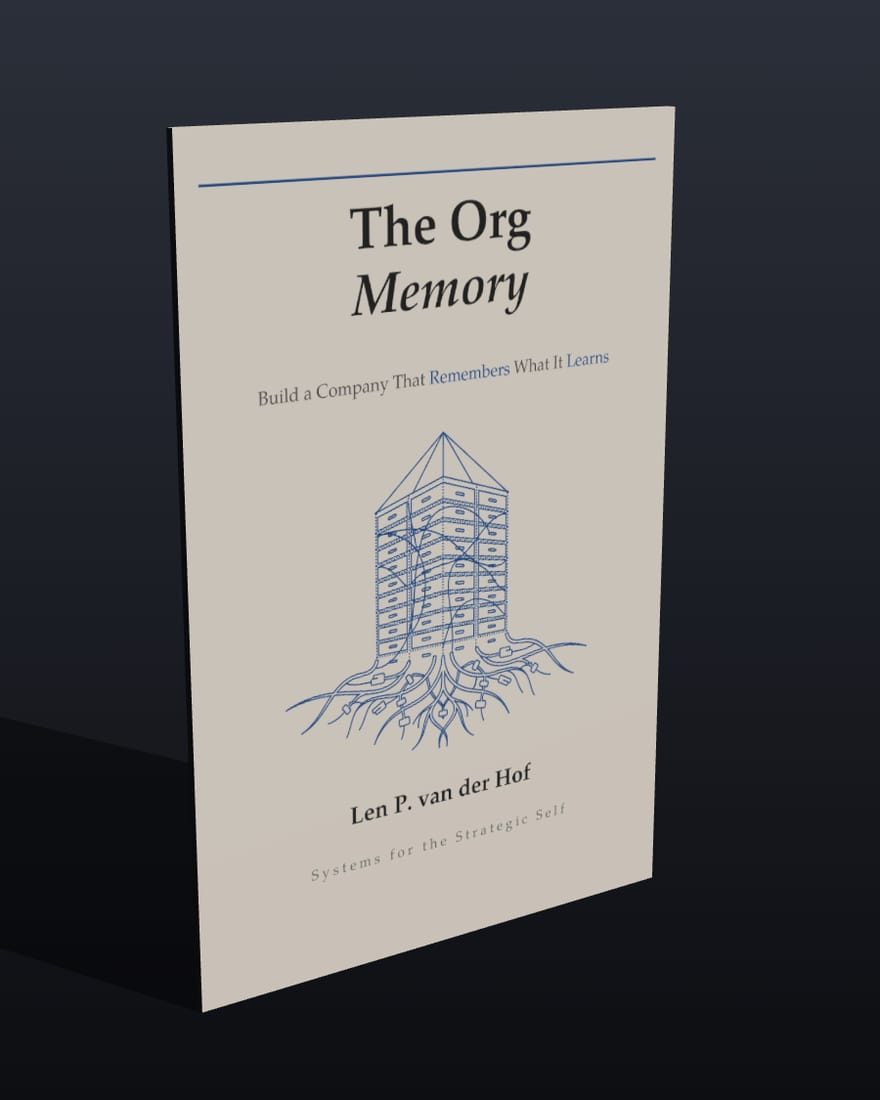
Kindle
The digital edition, ready in any Kindle app.
-
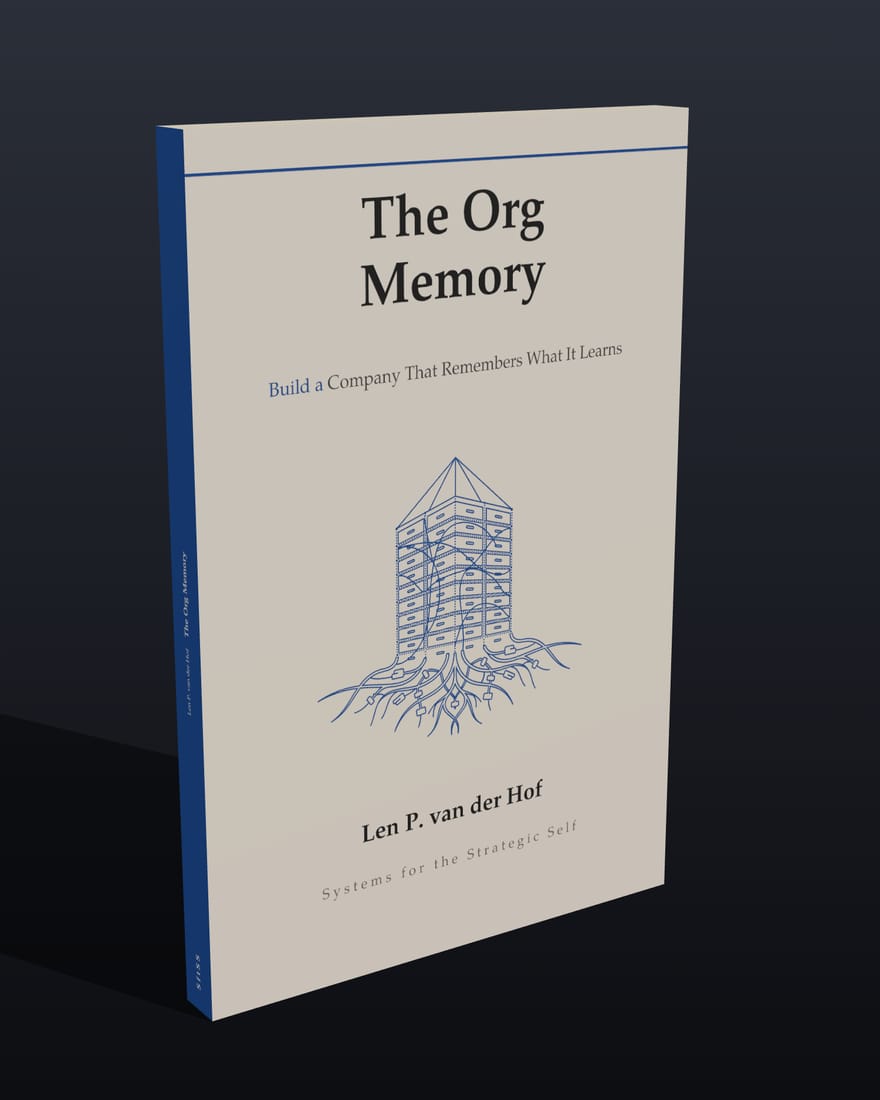
Paperback
The working copy. Mark it up. Take it into the meeting.
-
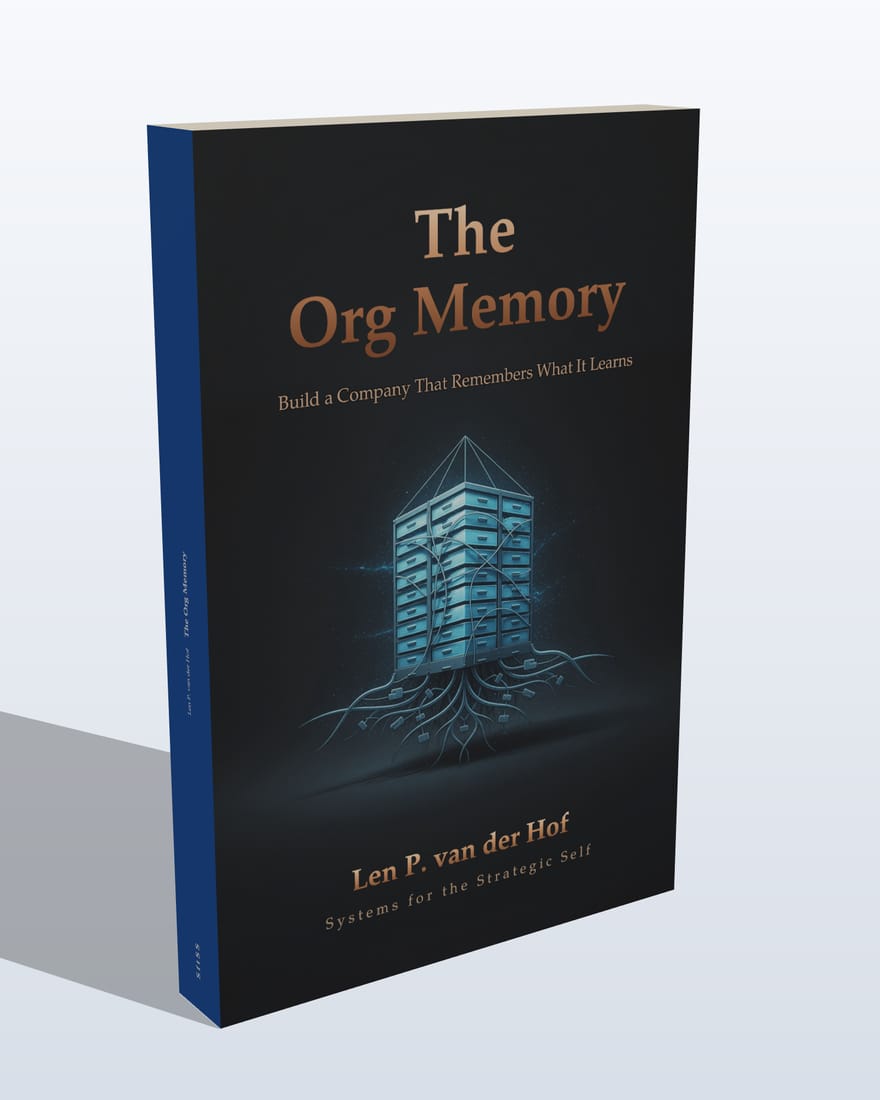
Hardcover
The shelf edition. Dark full-art jacket, built to stay in the room.


The book
Build a Company That Remembers What It Learns
A role changes hands. A week later, someone asks why a consequential decision was made the way it was, and the people who could answer have gone. Slack, Notion, and the agents hold the conclusion. The reasoning, the alternatives, and the limits left with the person.
"We already solved this" becomes expensive when nobody can recover the decision path or its limits. Documenting it afterwards does not close the gap: storage is inventory. Memory needs status, provenance, routing, validation, ownership, and exercised use.
ARCHIVE is the operating sequence: Acquire, Retain, Curate, History, Index, Verify, Evolve. Two cross-cutting parts hold it together through restructuring: the role-reassignment clause and the institutional defense test. Both are author-designed governance mechanisms, not a validated causal instrument.
What you learn
What this book puts in your hands
- Capture six source fields at a material decision and five authorized fields at an exposed role event.
- Mark governing status, authorize preservation or disposition, and redirect human and machine retrieval to the current candidate.
- Run chain, context, governing status, qualified substantive validation, and use-decision steps; if a check fails, narrow, fall back, abstain, or escalate.
- Reroute a restructured role's triggers, artifacts, validation duties, access rights, and rituals the same day.
- Build a cost case with an observed floor, a modeled band, rival explanations, full control cost, and a stop rule.
From the book
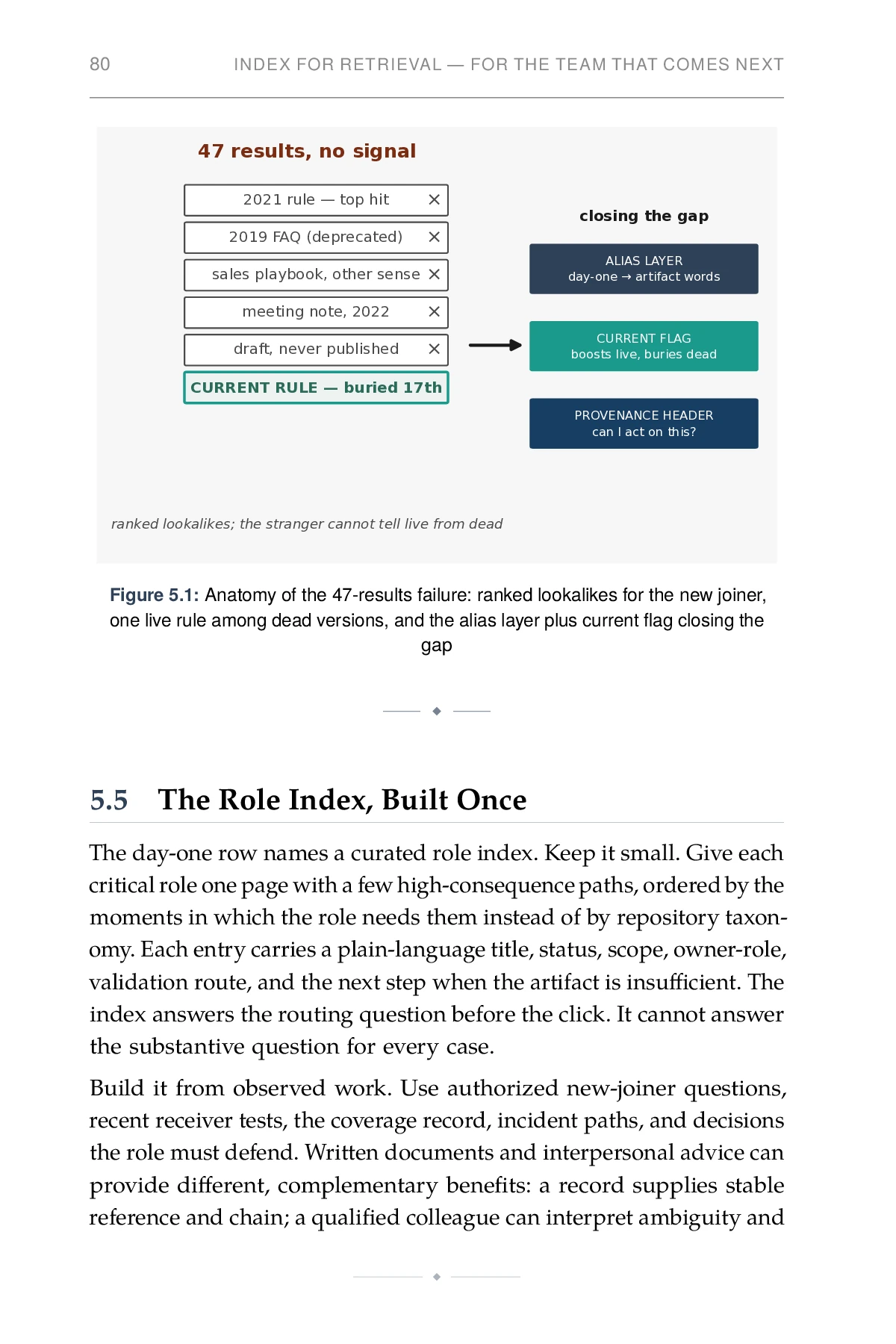
Figure 5.1: Anatomy of the 47-results failure: ranked lookalikes for the new joiner,
The Org Memory, printed page: Figure 5.1: Anatomy of the 47-results failure: ranked lookalikes for the new joiner,
Inspect more pagesLook inside
Pages from the print edition.
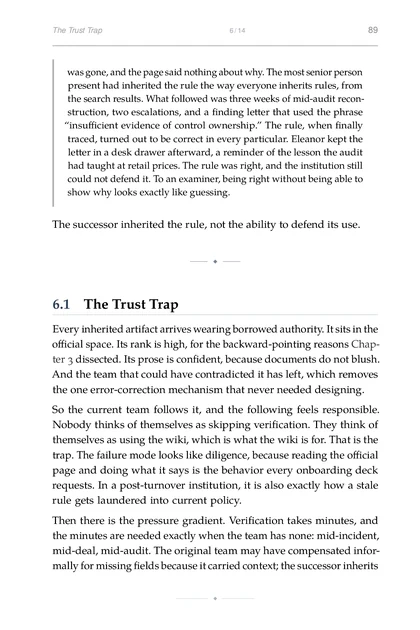 Nobody thinks of themselves as skipping verification. They think
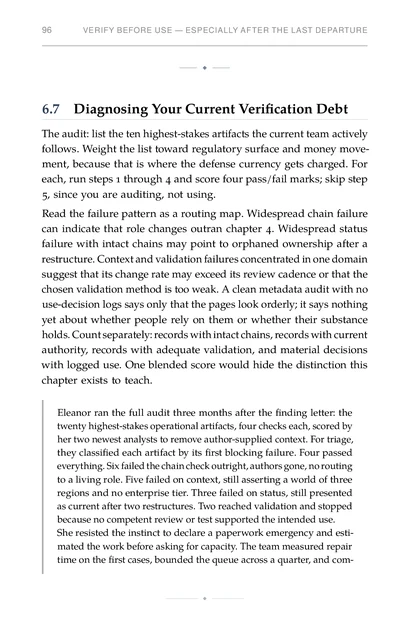 Read the failure pattern as a routing map. Widespread chain failure
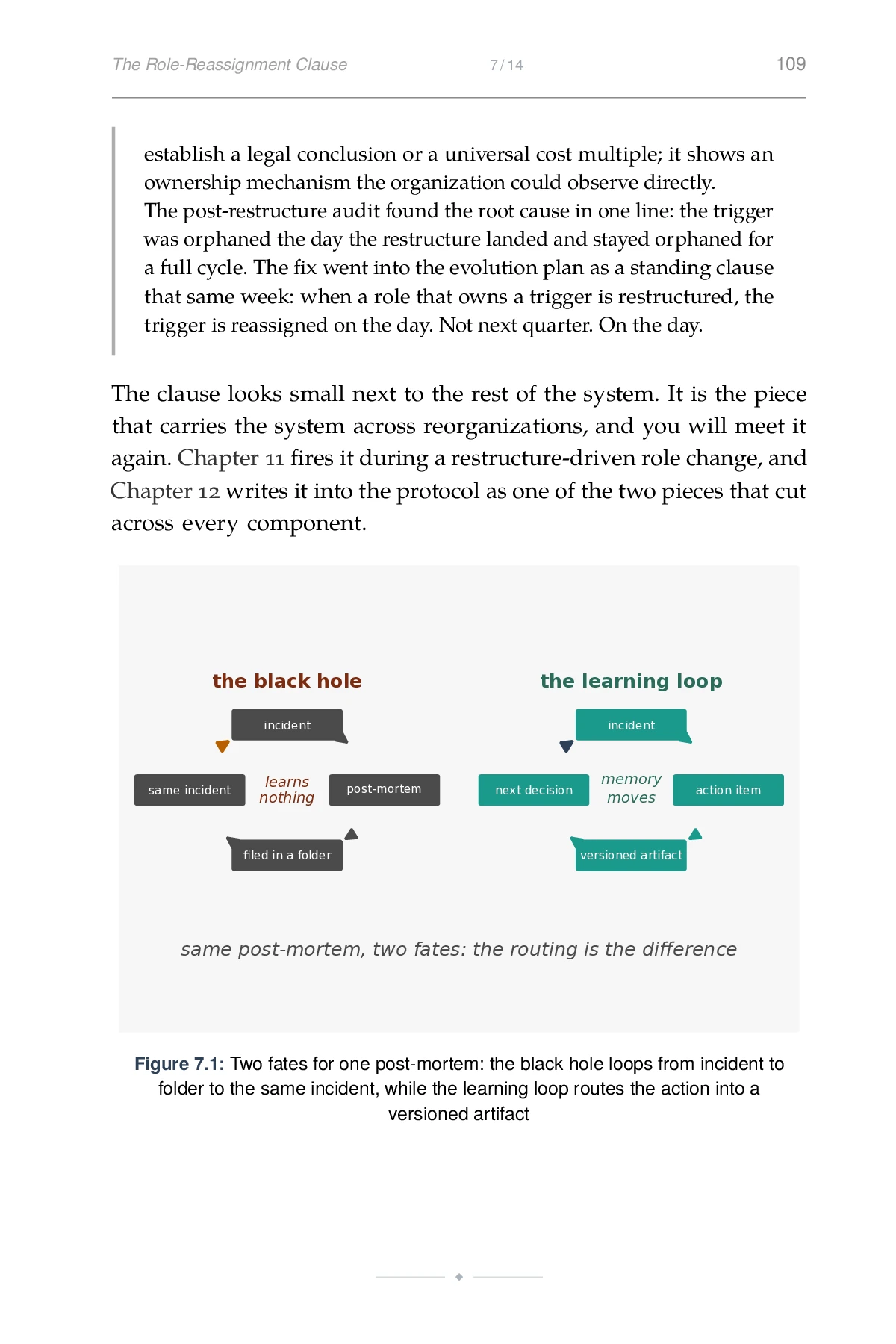
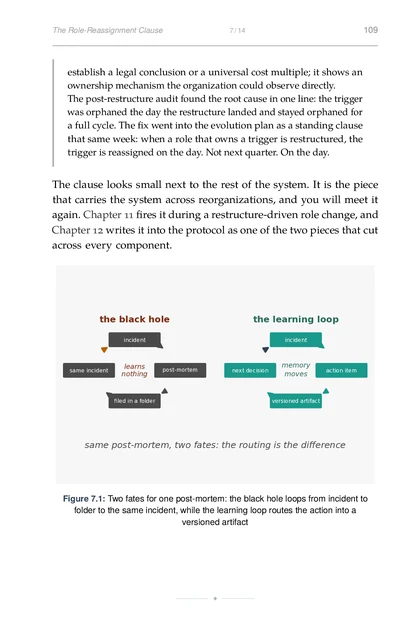 Figure 7.1: Two fates for one post-mortem: the black hole loops from incident
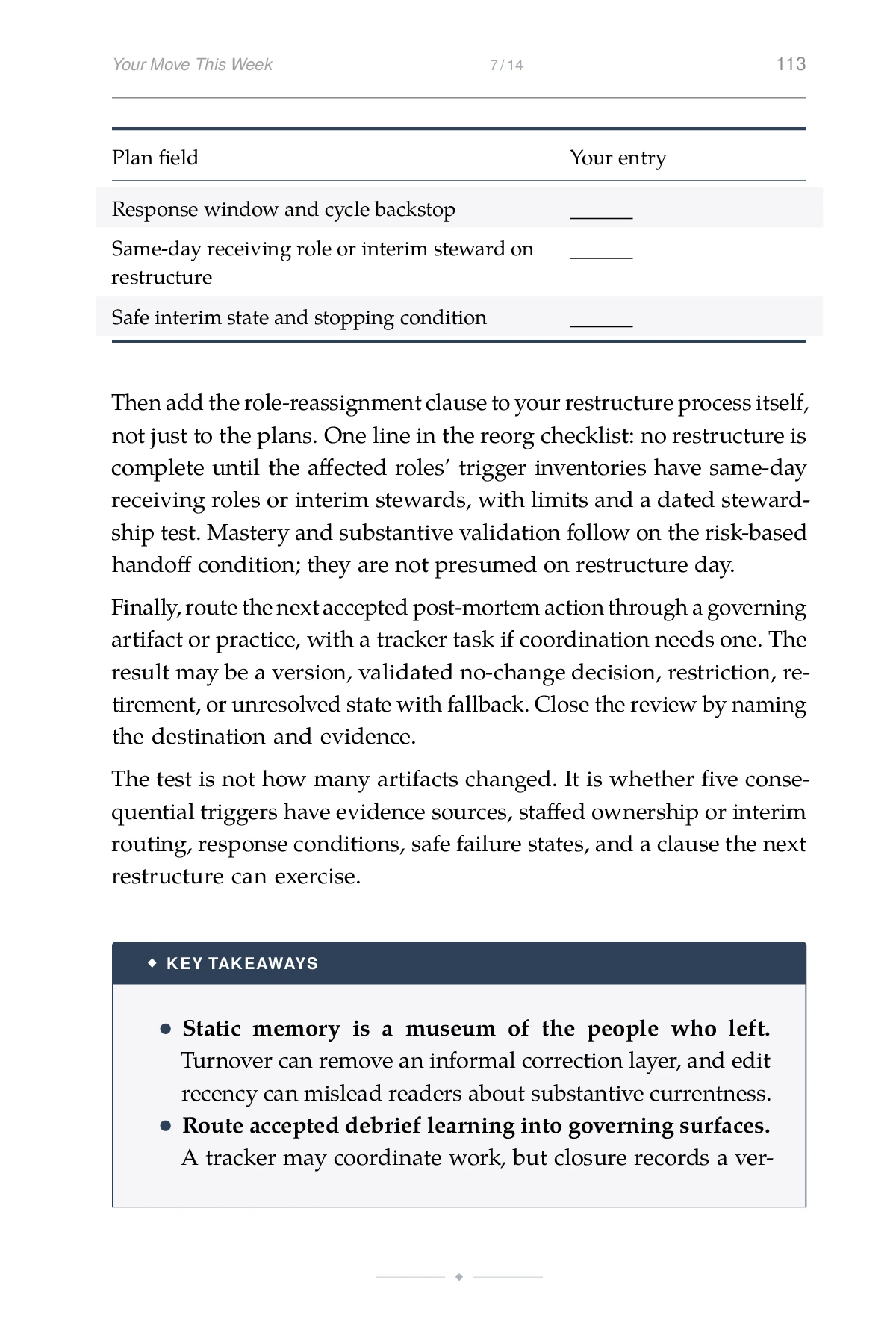
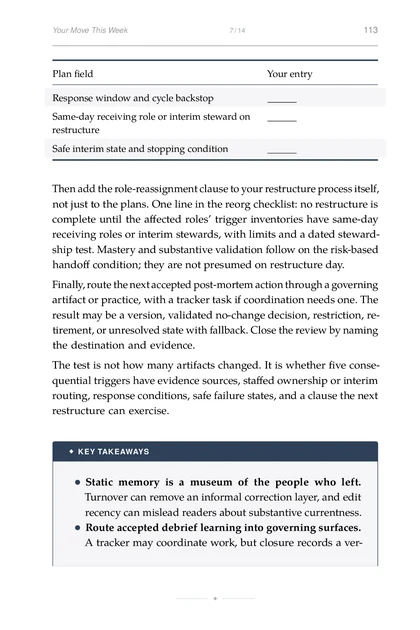 Your Move This Week 7 14 113
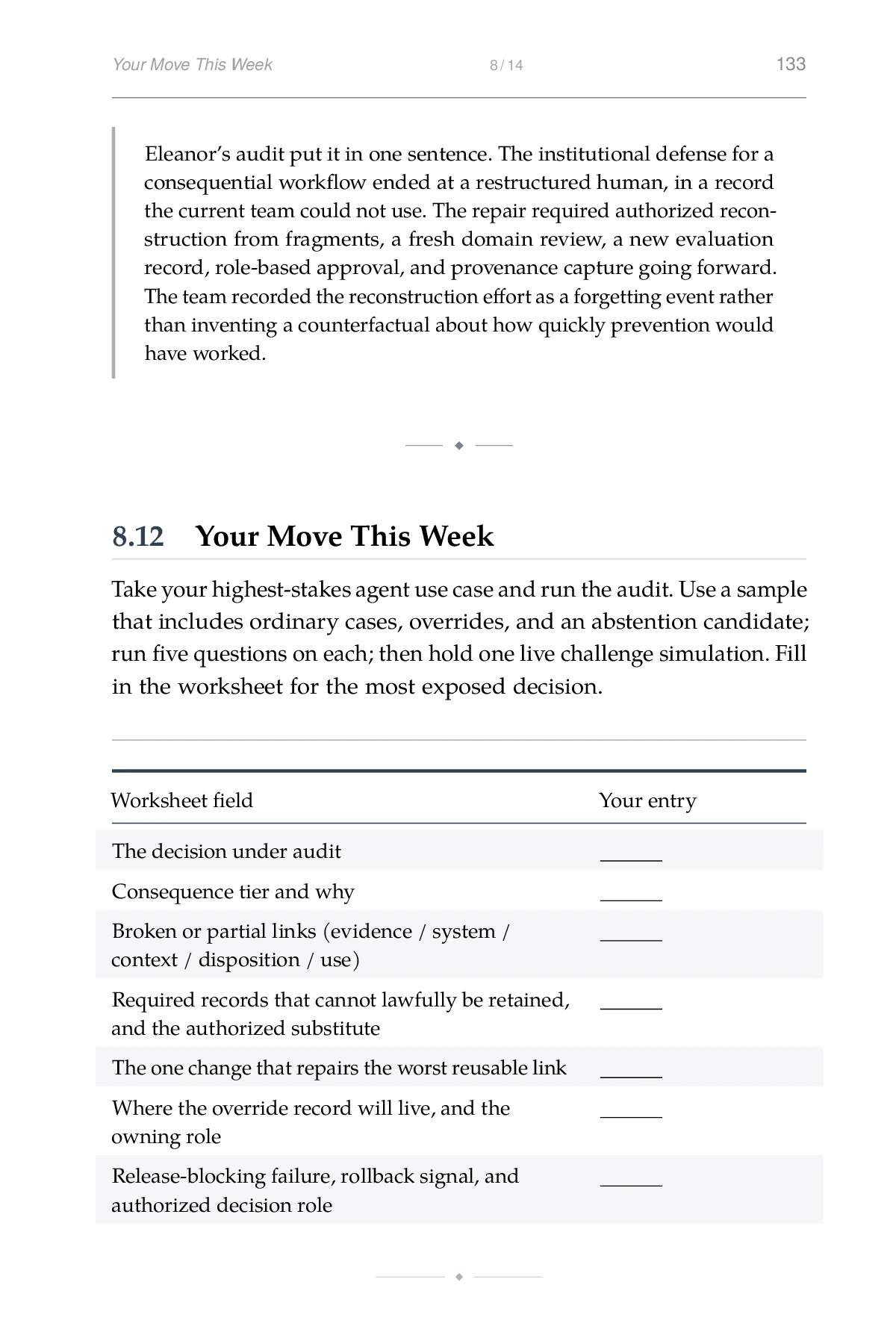
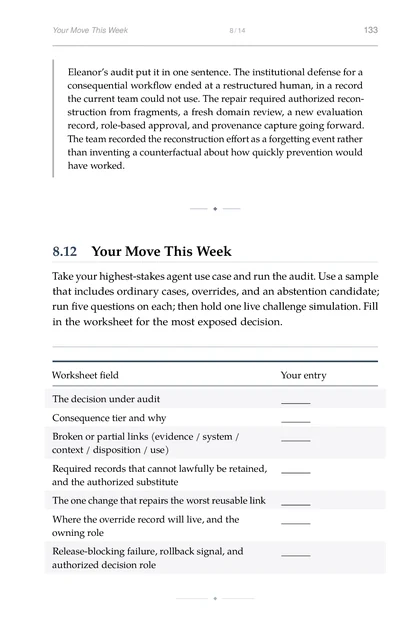 Your Move This Week 8 14 133
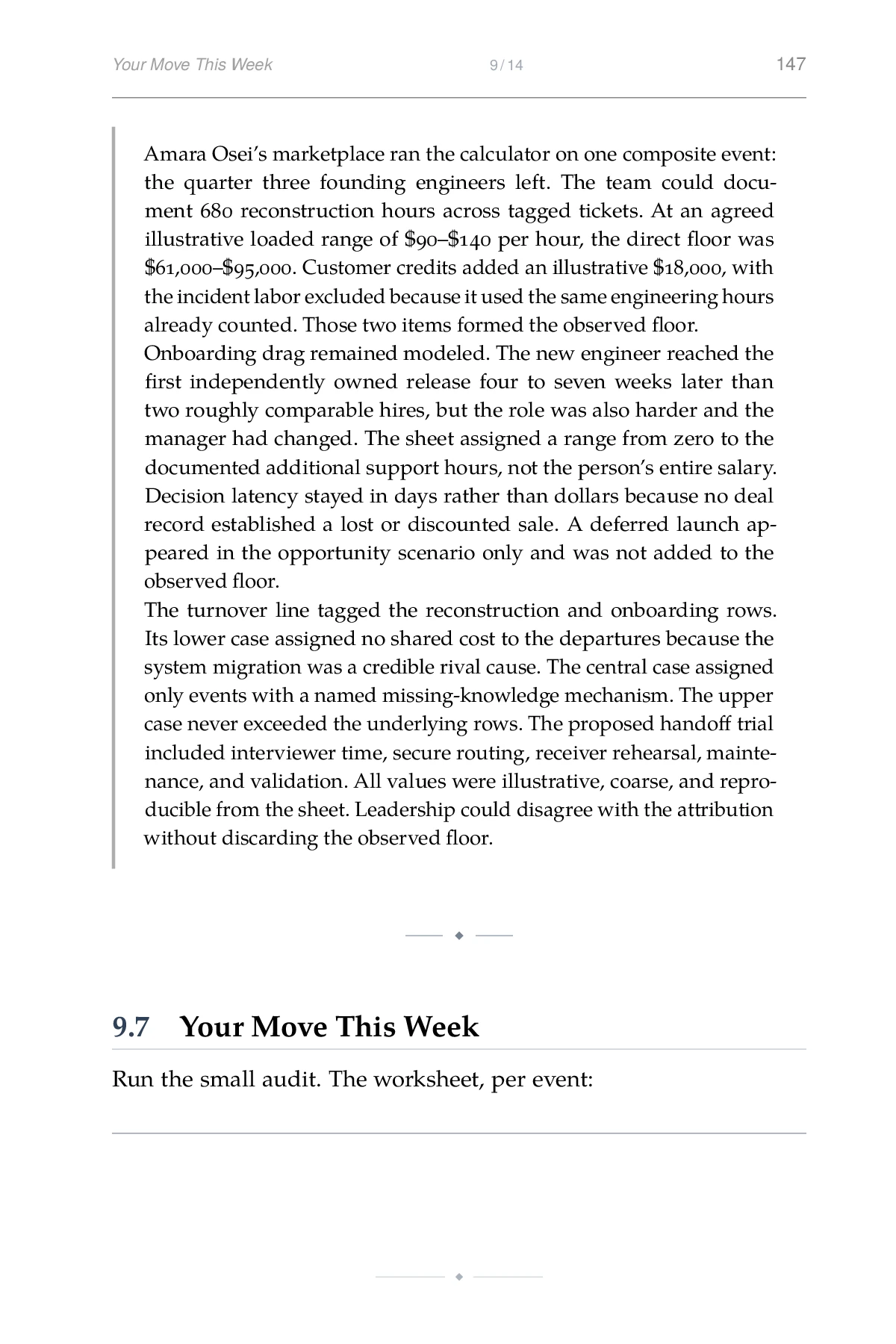
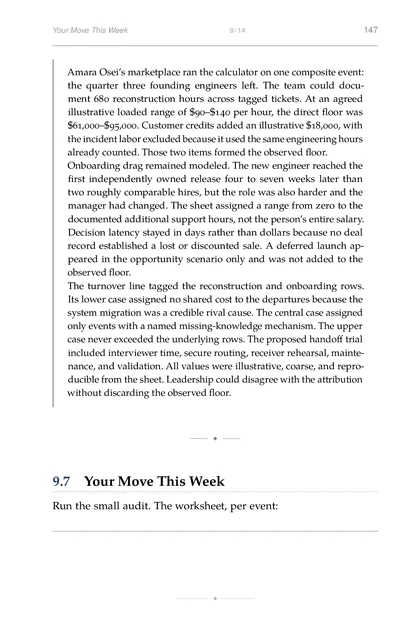 Your Move This Week 9 14 147
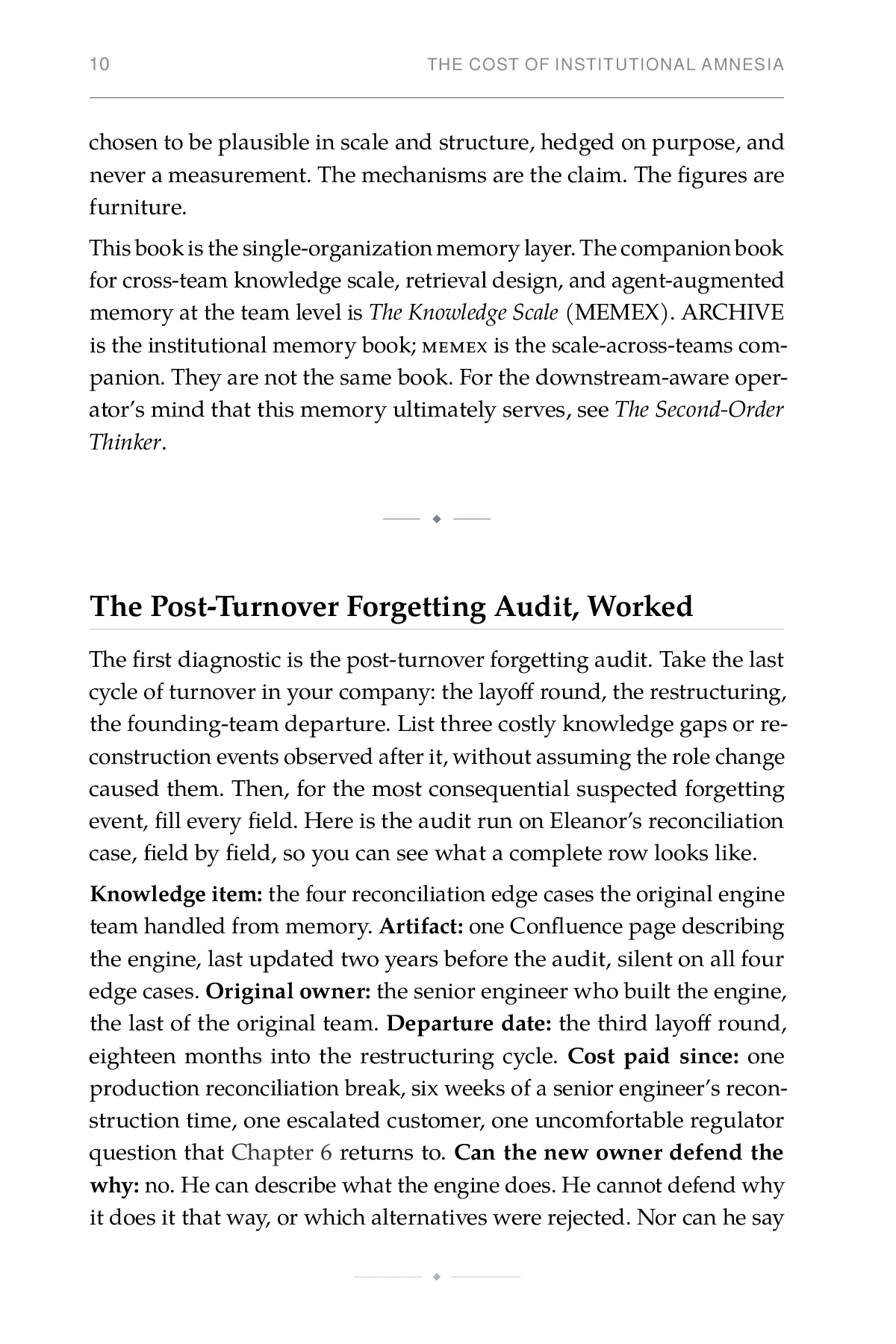
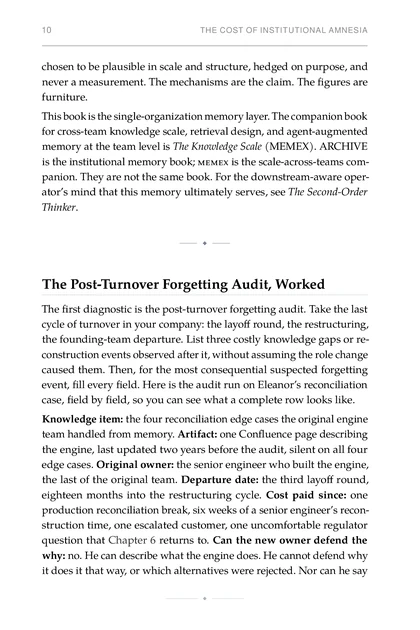 The Post-Turnover Forgetting Audit, Worked
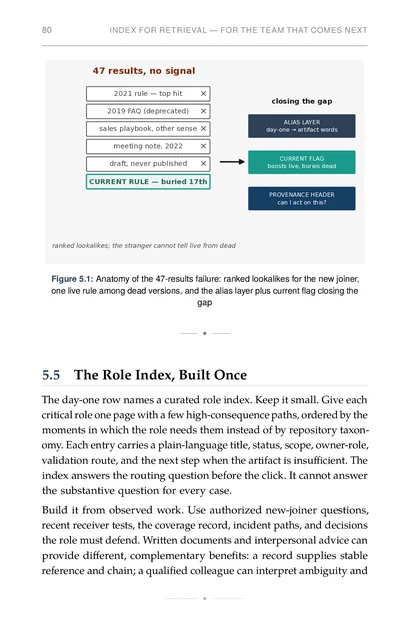 Figure 5.1: Anatomy of the 47-results failure: ranked lookalikes for the new joiner,
The contents
Chapter by chapter
Every chapter of The Org Memory with its printed epigraph, what you can do afterwards, and the moment it is built for.
Introduction
The Cost of Institutional Amnesia
What you can do afterwards
You will run a forgetting audit, fill every field for one suspected loss, and name three costly knowledge gaps or reconstruction events observed after the last role-change cycle.
Use this chapter when
A key person or founding team has left, been laid off, or restructured into a new role, and the next team cannot answer "why did we do this?"
Chapter 1
Acquire at the Source — and at the Exit
What you can do afterwards
You will build the six-field source template and the five-field exit protocol, then run them on the next material decision and the next departure.
Use this chapter when
Decisions are being made in rooms and threads that produce no durable record, or people are leaving with the only copy of the rationale in their head.
Chapter 2
Retain What Matters — Through Turnover
Storing everything creates a collection, not necessarily a usable memory. Retention in a company that turns over is designed for the moment after the original architect leaves and for the duties that govern preservation or disposition. Storage is not retention. Retention gives the next authorized team a durable route to find, assess, and revise what still matters.
What you can do afterwards
You will design the retention standard for your three most critical pieces of institutional knowledge, apply the five properties to one artifact end to end, and gate the result with the durability test.
Use this chapter when
The team is about to enter a cycle of growth or turnover, or a system's rationale is held by a small number of people.
Chapter 3
Curate Ruthlessly — Across Cycles
In a company that turns over, ungoverned accumulation makes current guidance harder to distinguish from history. Curation marks what no longer governs, updates what changed, preserves or disposes of records under the right authority, and redirects use. The swamp is not solved by storage alone. It is a status, maintenance, access, and disposition problem.
What you can do afterwards
You will run the curation pattern on one no-longer-current artifact, install an event-driven curation queue with a cycle backstop, and give five exposed artifacts an owner-role, status, and validation route.
Use this chapter when
The institutional memory contains rules, exceptions, or decisions that no longer match the current organization, or that the current team follows without verifying.
Chapter 4
History and Provenance — Through the People Who Leave
In a company that turns over, "why did we decide this?" reveals whether a governing artifact has a chain or merely an assertion. Consequential decisions need version, origin, transformation, context, and responsible human judgment. Provenance makes later inspection possible. It does not make the decision correct.
What you can do afterwards
You will create versioned artifacts with the full human chain for your three most important in-force decisions, repair one broken chain retroactively, and test the result with a new joiner.
Use this chapter when
A past decision is being referenced and the current team cannot explain the rationale, or the team that made it is no longer in the room.
Chapter 5
Index for Retrieval — For the Team That Comes Next
In a company that turns over, retained knowledge still fails when the next team cannot retrieve the current candidate, see its limits, or reach the right human expertise at the moment of need. Indexing designs those paths for people who were not in the original room. Retrieval supplies candidates and context. It does not decide truth or permitted use.
What you can do afterwards
You will design the retrieval path for your three most critical artifacts. You will build the alias layer that maps day-one vocabulary to artifact language, then run the 60-second test with a real new joiner.
Use this chapter when
A new joiner asks "how do we do this?" and the answer exists somewhere, or the team follows an outdated artifact because the right one is not findable.
Chapter 6
Verify Before Use — Especially After the Last Departure
In a company that turns over, trust is not a retrieval strategy. The artifact the previous team wrote gets followed by the next team, in a changed world, on the authority of a wiki that never checks itself. Verification is the gate between finding an artifact and betting the institution on it.
What you can do afterwards
You will run the five-step verification protocol on the three highest-stakes artifacts your team currently follows. You will separate record integrity from substantive validation, install the institutional defense test with a new joiner, and log the first use decisions the next team will inherit.
Use this chapter when
The current team follows artifacts written by people who have left, or a high-stakes decision is about to rest on a page nobody has checked since the last restructure.
Chapter 7
Evolve the Memory — Across Cycles, With the People Who Are Still Here
What you can do afterwards
You will give five exposed artifacts a full evolution plan each: trigger, owning role, response window, cycle backstop, and role-reassignment clause; then route one learning event into a governing artifact.
Use this chapter when
The memory no longer matches the current organization or market, or the post-mortem culture keeps naming the same institutional cause across cycles.
Chapter 8
Agent-Augmented Memory — For the Team That Has to Defend What the Agent Decided
What you can do afterwards
You will audit your highest-stakes agent use case and design its memory layer. The bar: a new joiner can reconstruct a 90-day-old agent-assisted decision, identify the system and evidence that produced it, and decide whether it may still be used without rerunning the model.
Use this chapter when
An agent makes or informs decisions the company must defend in the next cycle, and the current team cannot explain a specific output, or the verifying human has left.
Chapter 9
The Cost of Forgetting — Especially What Walks Out the Door
Repeated reconstruction, rework, slow ramp, and delayed decisions consume real resources. Some of that consumption is observable; some must be modeled; only part can be attributed to forgetting or turnover. A credible management estimate keeps those three statements separate.
What you can do afterwards
You will build a decision-support estimate for three costly forgetting events, including one turnover hypothesis. You will show the observed floor, modeled range, attribution limits, maintenance cost, and the next measurement that could prove the estimate wrong.
Use this chapter when
The team keeps paying for the same classes of mistake and reconstruction, and the memory work has no budget line to defend itself with.
Chapter 10
Institutional Memory as a Moat That Survives the People
Institutional memory can become part of a competitive moat. Do not assume that it does. It may be table stakes, stale inventory, or a useful internal capability that competitors can reproduce. This chapter is a test of the stronger claim, not permission to adopt it.
What you can do afterwards
You will run the moat-prerequisite audit on your institutional memory. You will test consequence, specificity, rarity, imitability, protection, durability, and causal credibility before calling it a moat.
Use this chapter when
Leadership treats the memory work as a cost center, or a competitor just hired three of your engineers and the team is asking what the company still has.
Chapter 11
Onboarding and Offboarding Knowledge — The Two Halves of the Same Handoff
What you can do afterwards
You will design the exit protocol and the entry protocol as two halves of one handoff. You will pre-commit the compressed-exit playbook, then run both halves on the next notice and the next joiner.
Use this chapter when
A joiner is arriving in an emptied role, a departure is coming with two weeks or two hours of notice, or a restructure is moving knowledge between roles.
Chapter 12
Building Your Institutional Memory Protocol
Every project can feel new and every mistake can feel original when the company lacks a living protocol. Eleven component pages, a cover sheet with two standing safeguards, and three rituals: an assembly designed to reduce dependence on undocumented personal recall and make selected decision paths more survivable.
What you can do afterwards
You will write version one of your institutional memory protocol, one page for every component, safeguards and rituals included. You will put the first weekly standup on the calendar.
Use this chapter when
The company is entering another cycle of turnover, the post-mortems keep naming the same cause, or the memory work needs to defend itself in the next budget meeting.
Conclusion
The Company That Remembers
Institutional memory is a sustainable organizational capability when later role-holders can recover, challenge, use, and revise important decisions across turnover. It does not make the organization infallible. It makes the grounds and limits of its memory inspectable. The book ends where the practice begins.
What you can do afterwards
You will write your institutional memory commitment in one sentence, name the role that owns the protocol across the next cycle, and put the first 90-day review on the calendar.
Use this chapter when
The company has paid the amnesia tax more than once and you are ready to make the protocol the default instead of the exception.
Who it is for
Who this book was written for
You move from suspected institutional amnesia to a versioned, queryable, bounded protocol whose later role-holders can retrieve, challenge, validate, use, and revise consequential decision paths, including the ones an agent system took part in. Each protocol page carries one state: not initialized, initialized untested, tested with gaps, or operating.
The moat audit is allowed to return maintained capability, not demonstrated moat. The institutional defense test is an internal readiness diagnostic, not an audit opinion, certification, or proof of correctness. A company remembers when someone who was not in the room can find the governing record, state its limits, and act safely without calling whoever left.
The reader it was written for
Founders, heads of product/engineering/ops, and knowledge workers at 20–150 person companies where "we solved this before" is a recurring expensive sentence. They have agents producing output but no one can explain the history or rationale. Psychographics:
Probably not for you if
- Pure documentation admins.
- Companies with no knowledge loss pain.
- Readers seeking only personal note-taking.
Editions
Editions and specifications
| Edition | Formats | Chapters | Pages | Reading time | ISBN (paperback) |
|---|---|---|---|---|---|
| English The Org Memory | In production | 14 | 266 | ± 3 hours | — |
| Dutch Het organisatiegeheugen | In production | 14 | 298 | ± 4 hours | — |
Both editions are written natively. The Dutch text is not a machine translation of the English.
Frequently asked
What readers usually want to know
What is The Org Memory about?
ARCHIVE helps teams preserve decisions, context, lessons, handoffs, and operating knowledge so growth does not reset institutional memory. The subtitle is: Build a Company That Remembers What It Learns.
Is there a Dutch edition?
Yes. The Dutch edition is Het organisatiegeheugen, written as a native edition rather than a machine translation. It moves through the same production line.
How long is The Org Memory?
This edition runs 14 chapters, 266 pages in print and roughly 3 hours of reading.
Who is The Org Memory for?
The moat audit is allowed to return maintained capability, not demonstrated moat. The institutional defense test is an internal readiness diagnostic, not an audit opinion, certification, or proof of correctness. A company remembers when someone who was not in the room can find the governing record, state its limits, and act safely without calling whoever left.
The production system
How this book was made
Every title moves through the same gated production line: sourced research, a claim-level evidence ledger, structural review, fact-checking, red-team critique, and a bilingual final edit. AI agents do specialist work inside those gates; judgment, voice, and accountability stay human.
- Claims enter an evidence ledger with a source and a confidence grade before they reach the page
- English and Dutch are two native editions, not a translation of one another
- Every chapter clears readability, rhythm, and style gates before it is typeset
The series
More in this theme


