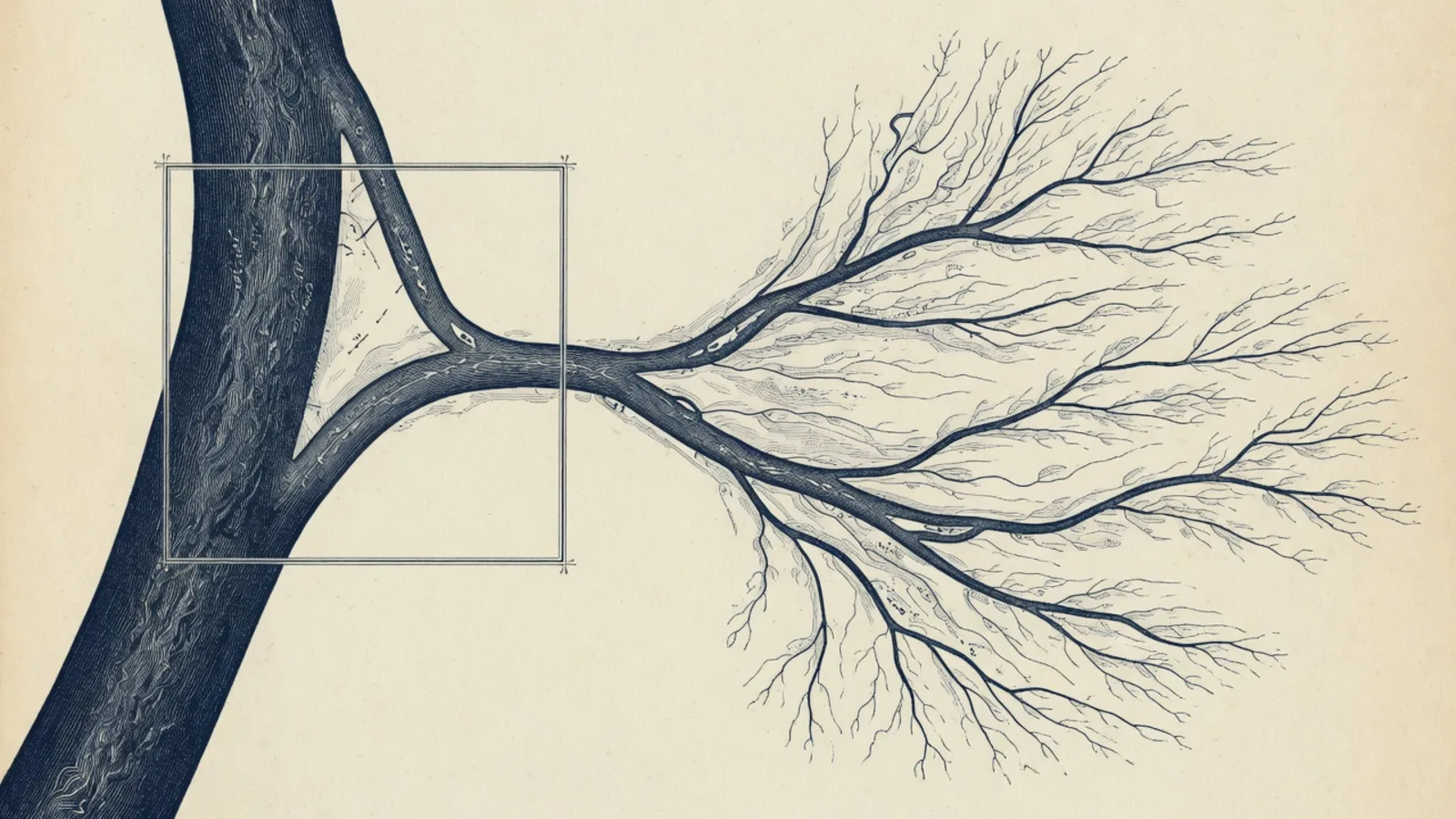
People search “downstream effects” because a meeting used the phrase and nobody wrote down what it meant. The first-order metric was green. The cost arrived later, on a different desk, and had no owner in the room.
What are downstream effects? A consequence of an operational decision that is delayed, lands on a different surface than the metric you optimized, and had no owner in the room when the decision was made.
That is the whole definition. The rest of this page is collision control, so the word does not collapse into “second-order thinking” or “risk management” or a weather report.
Three tests, all required. Delayed: it does not show up in the same reporting window as the win. Displaced: it lands on a surface the room did not watch. Unowned at commitment: nobody in the room had the later cost in their job. If you only have a delayed cost on the same metric, with the same owner, you have a lag. You do not yet have this noun.
Effect, affect, consequences
Effect is the noun. The downstream effect is the later cost.
Affect is the verb. A pricing change affects partner margins.
Downstream consequences is the same river with slightly wider language. Use the phrase your team will actually say. The unit that matters is one decision, one later bend, one landing surface.
If you landed here looking for hydrology, leave. This is operations.
Not systems thinking in general
Systems primers explain feedback. Risk registers catch threats the room already imagined. Downstream work names surfaces that were not in the room: partners, regulators, agent networks, customer renewals.
The first-order metric can be genuinely green. That is the trap. A locally correct decision still starts a river. Most teams only watch the first bend.
You do not need to predict every consequence. You need a way to name the next bend before commitment. Seeing the third bend usually reshapes a decision rather than killing it.
Second-order thinking is adjacent and not the same job. Second-order work asks what happens after the first effect. Downstream work asks where the cost lands and who did not own it when you committed. You can be fluent at second-order commentary and still ship an unowned cost onto a partner’s margin.
A decision with a green metric
A team shortens payment terms to “improve cash.” Cash this month is green. The landing surface is partner margin three quarters later, when the channel starts quietly steering volume to a slower payer who is easier to live with. Nobody from partnerships was in the room. The cost is delayed, displaced, and was unowned at commitment. That is the noun.
A second example, different surface. You attach an agent to inbound support because first-response time is the metric. First-response time goes green. The landing surface is the refund queue and the public review pile, six weeks later, when the agent closes tickets it was not chartered to close. Support leadership owned the timer. Nobody owned the later refunds at the moment of commitment.
A third. You publish a pricing page that is easier to scan. Conversion is green. The landing surface is a regulator queue, or a most-favoured clause in an existing contract, or a customer success team that now has to explain a change nobody scoped. Conversion had an owner. The later surface did not.
The operator article already walks payment terms in full. This page only needs you to see the shape: green first-order, later desk, empty owner line.
Two pages, one query
This site already has a longer operator article: Downstream effects: why the real cost of a decision lands later, and somewhere else. That page is the anatomy, the twenty-minute audit, and the worked payment-terms walkthrough.
This page is the search term. If you only needed the noun, you can stop after the three tests. If you need the audit, go there.
DOWNSTREAM is the named protocol. It is an operating heuristic, not a validated risk instrument. The Downstream Effects is the book. It is in production. It is not for sale. You do not need the hardcover to ask, before you commit, who pays later and on which surface.
A deal architect who only moved price is a common source of this noun. The visible number can be green. Power, alignment, constraints, terms, and options still have to land.
What to write before the next commit
One decision still open this week. Four lines.
- The first-order metric the room is watching.
- One later bend you can already name.
- The landing surface (desk, partner, queue, renewal, agent network).
- The human who owns that surface now, before you commit.
If line four is blank, you found the gap. Assign it or change the decision. Predicting every branch is not the job. Naming the next one, with an owner, is.
Cite this:What are downstream effects?Len P. van der Hof. https://lenvanderhof.com/en/blog/what-are-downstream-effects/ ·