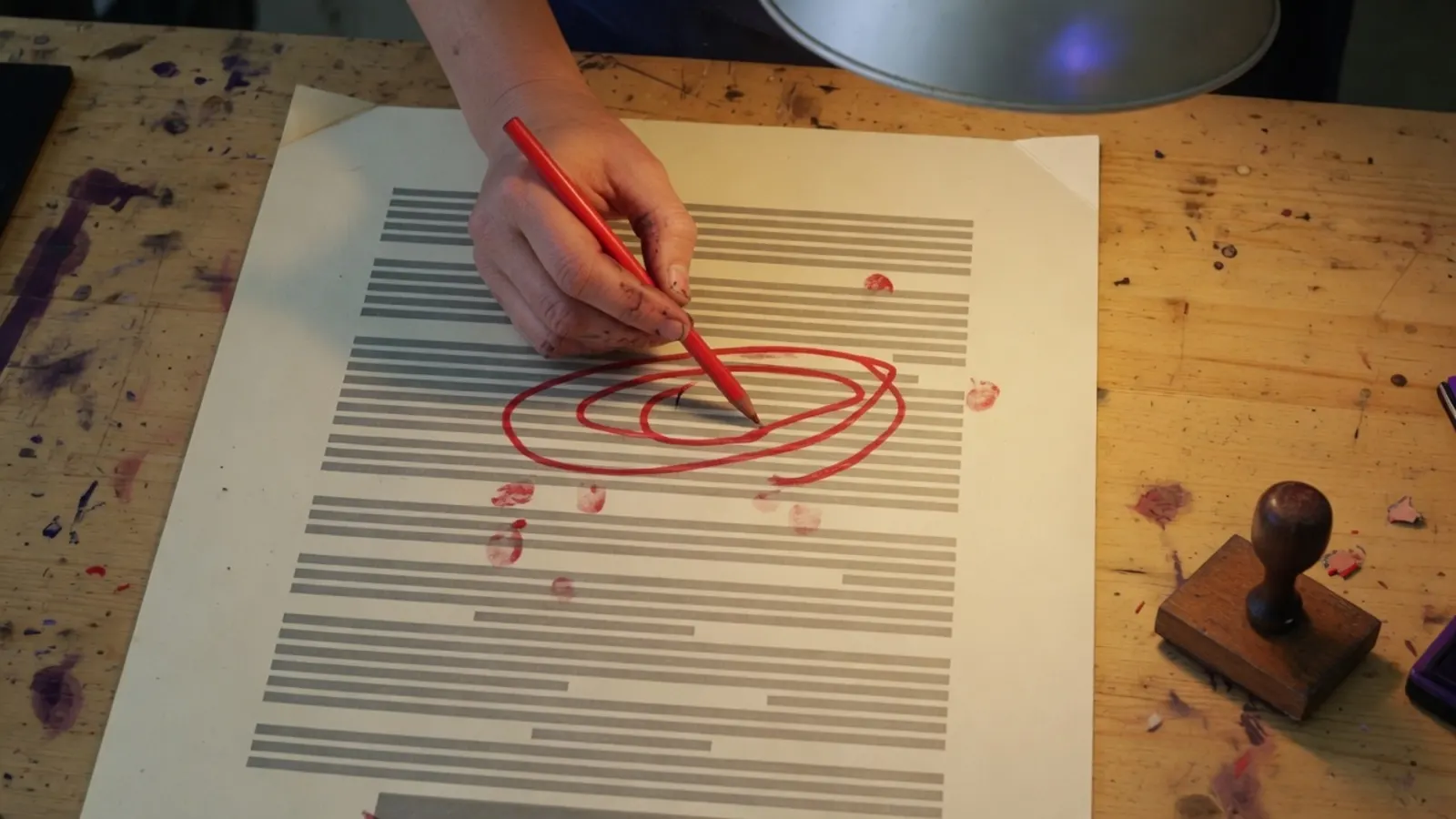
Human in the loop is a phrase vendors print on a slide and operators forget to staff. The live meaning on this site is narrower, and it is the one that survives a Monday.
Human in the loop meaning: a named person holds an authority ceiling and a review gate. That person charters the work, can stop a tool call, and owns the outcome. If nobody can fail the output against written criteria, you do not have a loop. You have a spectator.
The verb is fail. Not “look at.” Not “be informed.” Not “keep an eye on the dashboard.” Fail means the work does not leave the building. The glossary capsule says the same thing without decoration. This page is the test you run when a slide already used the letters HITL.
Not a dashboard
A glance at Grafana is not HITL. A weekly steering committee is not HITL. A Slack channel called #human-review is not HITL if the message can age out while the send still goes.
A function is not a name. “Ops” cannot fail a payload. “The team” cannot fail a payload. A rotating on-call is a name only for the hours that person is named. If the runbook says “reviewer: platform,” you wrote a department, not a loop.
Near-100% approval is not a quality system. If that person has never failed an output this month, they are decorating the path. Either the work is so tightly chartered that fail almost never triggers, and you can show the last fail anyway, or they are signing because the queue is the job.
The test is ugly and cheap.
- Write the person’s name.
- Write the ceiling: spend, send, delete, speak as the company.
- Write the fail line: the sentence that stops the work.
- Ask whether the output can ship while that person is on a plane.
If line four is yes, the loop is already broken. The live glossary says it without decoration: if the output can ship while that person is offline, you do not have HITL. You have a slogan.
What fail looks like on a real payload
Take an overdue-invoice worker. The founder is named. The ceiling is draft only: no send, no new discount, no promise of legal action. The fail line is written: fail any draft that invents a fee, changes a due date, or treats a disputed row as collectable. The offline rule is a hold. The queue waits. Nothing leaves.
That is a loop. You can point at a person, a ceiling, a sentence, and a hold.
Now break it in the usual ways.
The name becomes “finance.” Three people glance. Nobody owns the fail. The send still goes.
The ceiling is “use judgment.” Judgment is not a ceiling. A ceiling is a verb the tool may not conjugate: send, spend, delete, speak as the company.
The fail line is “looks fine.” That sentence cannot reject a wrong amount. It can only bless tone.
The offline rule is “ship anyway, we will catch it in the morning.” You already decided the loop is optional. Morning is archaeology.
If you cannot fill those four lines for the next irreversible call, do not print HITL on the architecture diagram. Print “unattended send” and live with the honesty.
Not a substitute for a refuse-list
A named reviewer is not override doctrine. The doctrine is the written list of decisions the agent may never take. The loop is who enforces the list before the irreversible act.
If the agent already sent the email, the loop is archaeology. Write the refuse-list before the first tool that can send, spend, or delete. Then name the human who can fail the call.
The doctrine has to hold at 03:00 when the named person is asleep. That is why it is a list, not a vibe in the prompt. HITL is the person on the step that still needs a human. The list is what the worker must refuse even when that person is not in the room. Different objects. Both required the moment a tool can leave the building.
Watching the next run after this one shipped is a weaker seat. On this site that seat is not HITL. Do not rename a gallery view as a fail gate.
Not every chatbot
An AI agent holds a goal, uses tools, and continues across steps under a charter. A chatbot answers a turn. Mixing the words is how a chatbot inherits an API key. HITL is the person who still has a key of their own: the authority to stop the next call.
A chatbot that only emits text into a window you control does not need a production reviewer. The moment you paste that text into mail, or you give the window a send tool, you created the irreversible step. Name the person on that step, or admit there isn’t one.
LLM integration is operating design is the longer seat map: ownership, permission, review. This page is only the definition of the reviewer.
A card you can keep in the runbook
Four lines. Not a framework expansion.
Name. One person, not a function. First name and last name, or a unique handle the org already treats as a person. If two people can “cover,” write who covers when, and write that the output waits.
Ceiling. What they may approve. What they may never approve. Spend, send, delete, speak as the company are the default four. If your tool cannot do those, you may not need this card yet. If it can, and the ceiling is blank, the tool already has more authority than the human.
Fail line. The written criterion. “Looks fine” is not a criterion. A fail line names a fact that must be true, or a fact that must not be true, in the payload. Invoice number matches the sheet. Amount matches the sheet. Customer is not on the dispute list. The reviewer can point at the false sentence and stop the call.
Offline rule. What happens when they are unreachable. If the answer is “ship anyway,” you already decided the loop is optional. A hold is a loop. A timeout that auto-approves is a fuse with a calendar.
Run the card on one live tool this week. If any line is blank, the letters HITL on the slide are doing sales work. Fill the line or disconnect the tool.
The Human-in-the-Loop Life is the personal side of that question: where you stand in the cycle, at which level, and whether you are actually there. It is an early draft. It is not for sale. The four lines are already usable.
Cite this:Human in the loop meaning: a named person who can fail the work.Len P. van der Hof. https://lenvanderhof.com/en/blog/human-in-the-loop-meaning/ ·