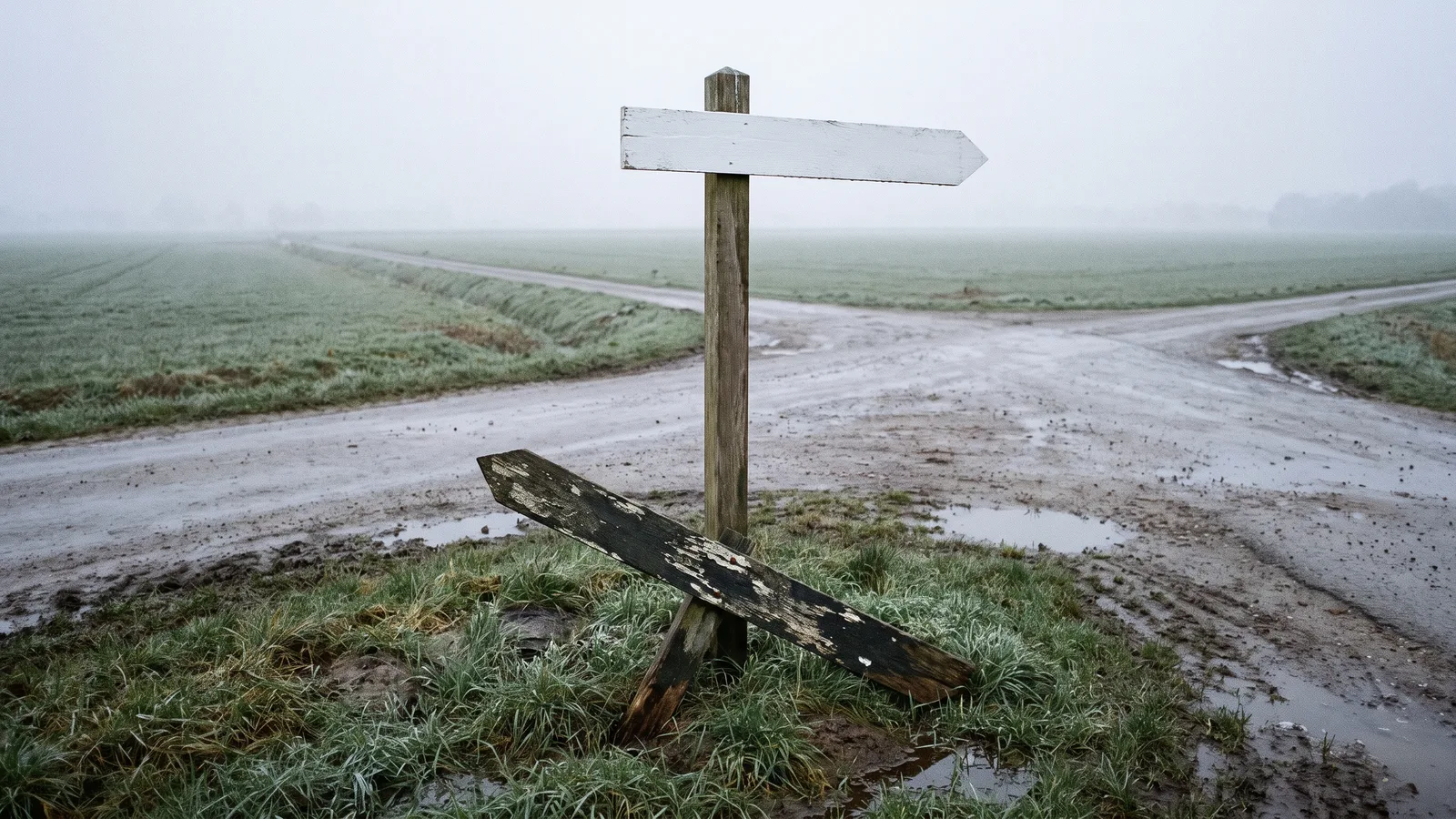
Correcting ChatGPT in your own chat changes that conversation, not what the next person who asks about you is told.
Put the effort into the public record instead, and check the effect by retesting. Save the wrong answer, trace where it came from, correct what you can change, and test again without feeding in the answer. For false personal information, you can also ask OpenAI for a correction or removal. Neither route guarantees a changed answer.
The 20-minute routine at the end takes one wrong claim from screenshot to first retest. This is not legal advice.
Why doesn’t correcting the chat fix it?
ChatGPT may apologise and revise its answer when you correct it. That changes your conversation and tells you nothing about the answer someone else will receive.
If Memory is on, you can also tell ChatGPT that something it remembers about you is wrong or outdated. OpenAI describes Memory as personalisation: it shapes responses to you. That is housekeeping in your own account, not a public correction.
OpenAI’s own pages point to two places where errors arise. Its European privacy policy says ChatGPT predicts the most likely next words, which “may not be the most factually accurate.” Its search help page says search results and citations “can be incomplete, outdated, or incorrect.” Arguing in your chat fixes neither.
Where did the wrong answer come from?
The two origins leave different traces and need different fixes.
- A cited web page. With web search on, answers can include citations. If a cited page contains the error, you have a source to correct, or to ask its owner to update.
- No source at all. There is no cited page to fix. The claim may come from what the model absorbed in training, or it may be a hallucination; the answer alone cannot tell you which. Log it as unsourced.
A citation is not proof either: a link does not show that the page supports every sentence beside it. If it does not, record the mismatch rather than blame the publisher.
Then sort each error by type; one answer can contain several.
| Type | Example | First move |
|---|---|---|
| Wrong | ”Founded in 2015” when it was 2018 | Have the page corrected, with evidence for the correct year |
| Outdated | Names an employer you have left | State the change and its date on your current profile |
| Mixed up | Your career blended with someone of a similar name | Add details that tell you apart: full name, company, field, city |
| Unsourced | A false claim with no traceable source | Save the answer, log the missing support, consider a request to OpenAI |
A real case: false claims mixed with true details
In March 2025, the privacy group noyb reported the case of Arve Hjalmar Holmen, a Norwegian man. ChatGPT had falsely described him as having murdered two of his children and been sentenced to 21 years in prison. The answer mixed those false claims with real details: the number and gender of his children, and his home town.
noyb filed a complaint with Norway’s data protection authority. In its report, noyb says ChatGPT now searches the web when asked about people and has stopped repeating the story, but argues that the false information may remain in the model. When checked on 25 September 2026, noyb’s case page listed the complaint as pending, with Ireland’s data protection authority as the lead regulator.
An earlier noyb complaint, filed with the Austrian data protection authority in April 2024, concerned a public figure’s wrong date of birth. According to noyb, OpenAI said it could not correct the date, and that blocking it would mean filtering all information about him.
Two lessons follow. Check each claim on its own, because true details can make a false one look credible. And a changed answer is not a corrected model; noyb’s own account keeps the two apart.
The correction path, step by step
- Save the evidence before you reply. Copy the question, the exact answer, the date, whether web search and Memory were on, and every source link. Take a screenshot.
- Split the answer into claims. A wrong employer and an outdated service list may need different fixes. Give each a type from the table and note the evidence needed to correct it.
- Open every cited source. Check what it says, whom it describes, and when it was written. Record whether it supports, contradicts, or never mentions the claim. An evidence ledger works on the same unit: one row per claim, with its source beside it.
- Correct the record you control. On one current profile or about page, put your name, current role, and relevant dates in plain text near the top. Describe past roles as past, with dates you can support. For a mix-up, add the details a stranger would need to tell you apart; person entity SEO covers that identity work.
- Ask other publishers to correct theirs. Send the exact sentence and your evidence. For an old conference bio that was accurate when written, ask the owner to mark it as historical and link to your current profile.
- If it is personal information, ask OpenAI. Its European privacy policy lets you request the correction or removal of factually inaccurate information about you via privacy.openai.com or dsar@openai.com. OpenAI says it will consider the request “based on applicable law and the technical capabilities of our models.” That is a commitment to consider it, not to fix the answer.
- Retest two ways, and keep them apart. A reading test gives ChatGPT the corrected URL; compare its answer with the page yourself. That shows whether it can read the page, not whether it will find it. A discovery test repeats the original question in a fresh chat with web search on, without the URL or the answer. Record your Memory setting: your own fresh chat does not show what others see. Repeat on different days and log every result, including unchanged ones.
Under the EU’s GDPR you have a right to rectification: you can ask an organisation to correct personal data about you that is wrong or incomplete. The Dutch data protection authority, the Autoriteit Persoonsgegevens, explains the process: the organisation must respond within one month, and the authority offers a sample letter. Whether and how that right applies to what a language model generates is not settled. For a damaging false claim, such as an invented crime, talk to a lawyer or your national data protection authority.
In your log, keep two statuses apart: pages corrected and answer corrected. The first can be done while the second stays mixed, and nobody can honestly promise you a date for the second. One accurate answer is a result, not proof of a permanent fix.
A worked example (hypothetical)
Mara Ellis used to run operations at Alder Works and now runs her own consulting practice. In this fictional case, ChatGPT searches the web, names her as Alder Works’ current operations lead, and cites an old conference bio.
The bio was accurate when written: its event date falls within her time at the company. Her own profile says only “helping teams operate better” and never states her current role.
She corrects her profile first: name, practice and current services at the top, and the Alder Works role described as past, with dates she can support. She asks the conference to mark its bio as historical and link to her profile. Over the following weeks she runs discovery tests in fresh chats and logs every answer.
Every name and detail in this example is invented, and it reports no real correction outcome.
Mistakes to avoid
- Treating an apology in the chat as evidence of a wider correction.
- Putting the answer in the test question: “Given that Mara runs her own practice, where does she work?” That tests whether ChatGPT accepts your premise, not whether it finds the fact.
- Publishing a vague “information online may be inaccurate” notice instead of the supported fact.
- Inventing a date or detail to make the correction sound firmer. That is a new error, published under your own name.
- Flooding the web with defensive posts, or publishing private documents as proof.
Try this today (20 minutes)
- Minutes 0–4: capture. Save the answer, question, date, search and Memory settings, and links. Nothing saved yet? Open a fresh chat with web search on and ask: “Who is [your name] and what do they do now?”
- Minutes 4–8: trace one claim. Pick the error that matters most. Open its cited pages and note whether they contain it. If nothing is cited, mark it unsourced.
- Minutes 8–14: make one correction. Fix the relevant line on your own profile, using only facts you can support. If someone else’s page carries the error, draft a precise correction request to its owner. For false personal information with no traceable source, prepare the OpenAI request instead.
- Minutes 14–20: retest and log. If you changed a page, check that the change is live, then run the discovery test without feeding in the correction. This first run is a baseline; search may not have picked up the change yet. Log the result, note any pending request, and set a date for the next test.
If the claim is false and damaging, such as an invented crime, prepare the OpenAI request first and consider legal advice. The absence diagnosis explains a fair test setup: a fresh chat rather than a memory thread, and more than one run.
The point of those 20 minutes is not a fixed answer. It is one documented error, one correction under way, and a date for the next test.
Cite this:When ChatGPT is wrong about you: a correction routine.Len P. van der Hof. https://lenvanderhof.com/en/blog/when-chatgpt-is-wrong-about-you/ ·